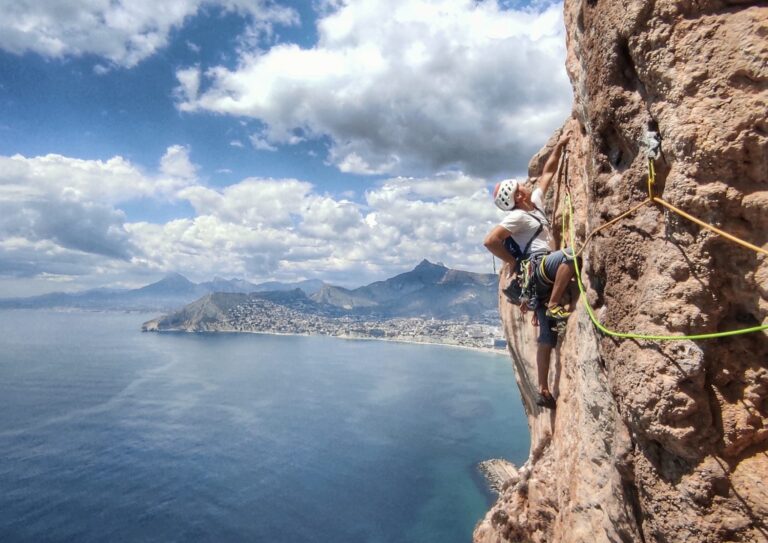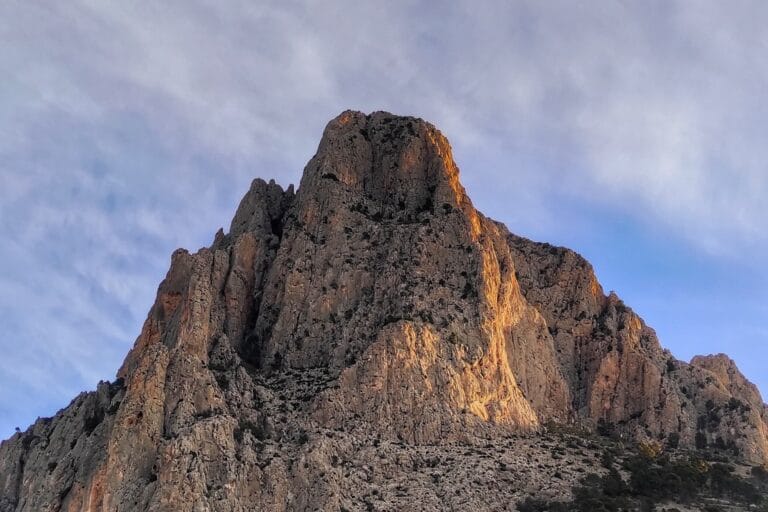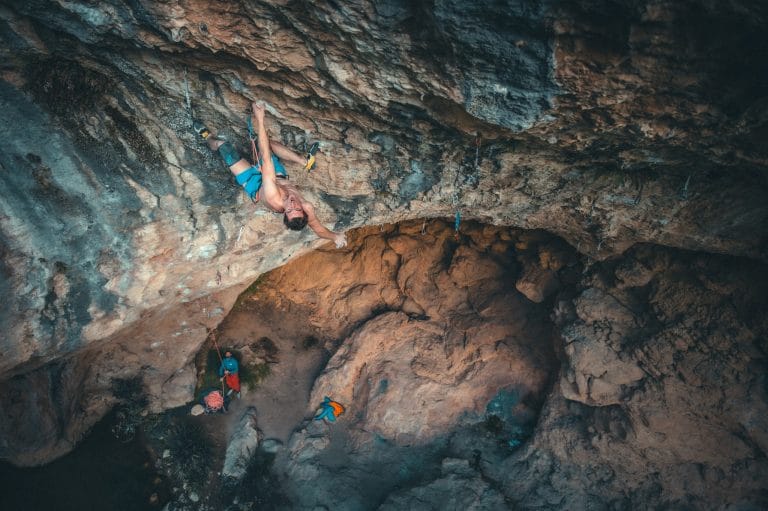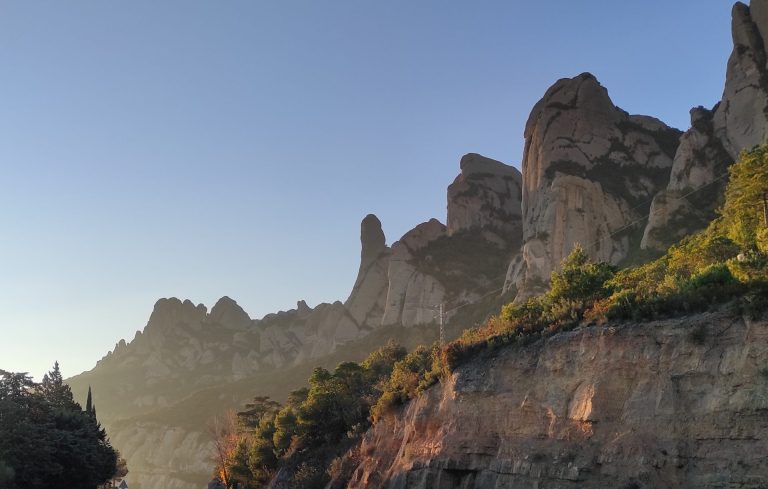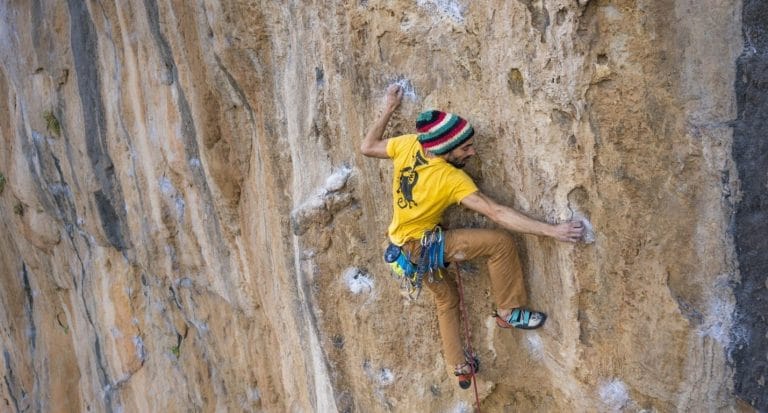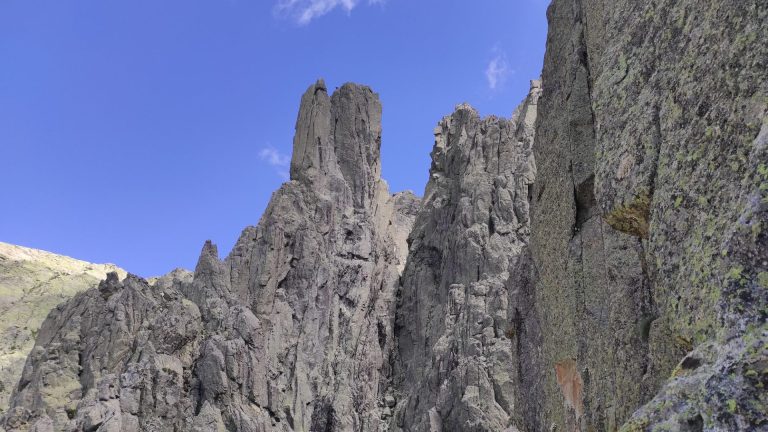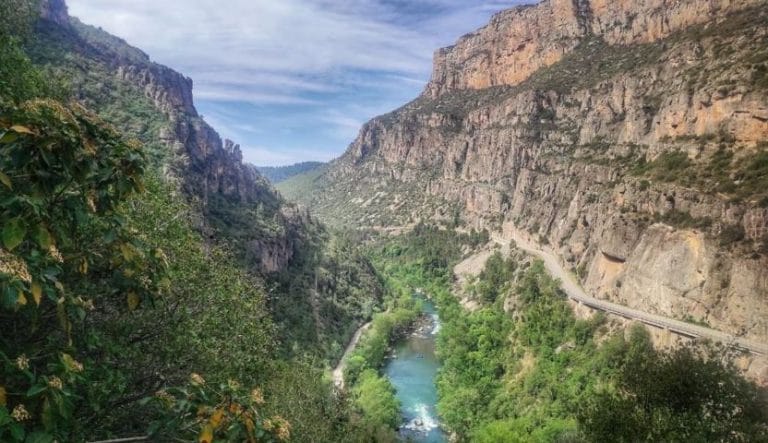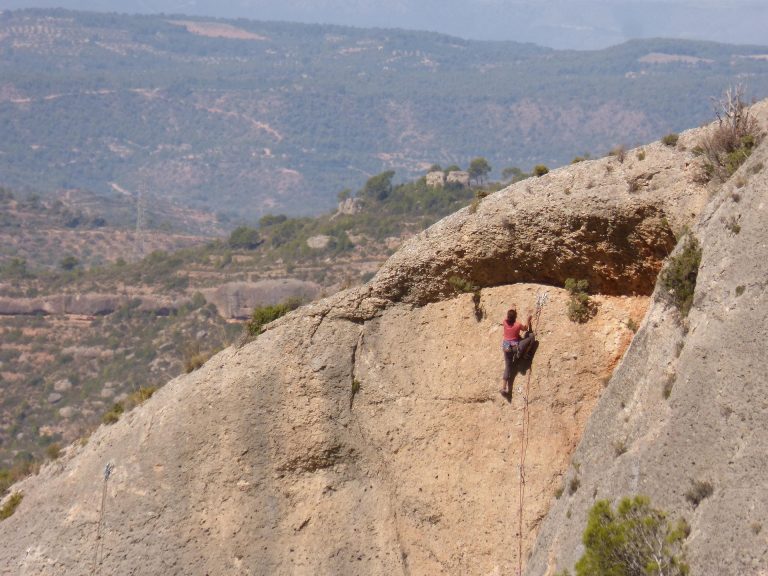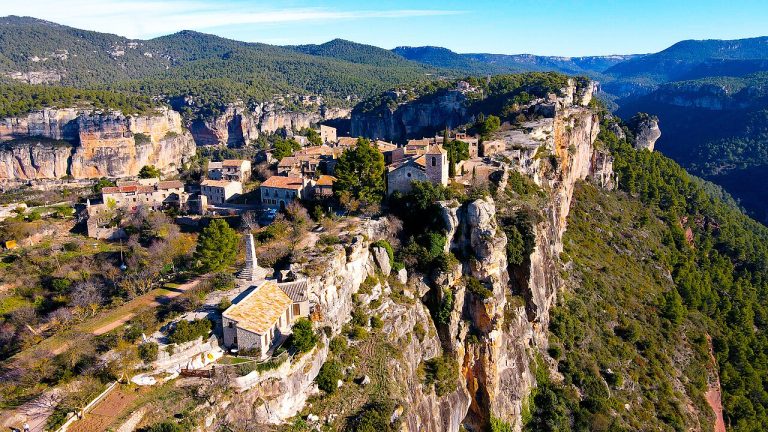

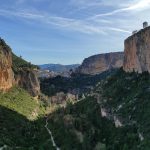
Chulilla is a small village in the hills an hour inland from Valencia, Spain, and one of the best-known winter sport-climbing destinations in Europe. The Turia river has cut a canyon of orange and grey limestone here, and between the canyon and the crags just outside it there are more than 1,300 catalogued routes, from 8-metre 5s that feel like high boulder problems to 55-metre extensions at 8c+. Climbers come from across Europe and well beyond to spend a week, a month or a whole winter. This guide is written for exactly that kind of trip, and for people who have never been to Chulilla or to Valencia before.
Contents23 sections
- Chulilla at a glance
- Is Chulilla right for you?
- When to go, month by month
- Getting to Chulilla (and around Valencia)
- Practical basics for first-time visitors to Spain
- Where to stay for a week, a month or a whole winter
- Everyday life in Chulilla
- Fees, parking and local rules
- How the canyon is laid out
- Sun, shade and rain: choosing a crag
- French grades, in plain English
- Which crags for your grade
- Plans for one to four weeks
- Must-do routes by grade
- Multi-pitch and adventure routes
- What to pack
- Safety and good manners
- Rest days and things to do
- A little history
- Guidebooks and topos
- Your first trip? Climb with a qualified guide
- Climb in Chulilla with qualified guides
- Frequently asked questions about climbing in Chulilla
Chulilla at a glance
- Where: Chulilla, province of Valencia, eastern Spain. About 64 km (40 miles) and one hour by road from the city of Valencia; 48 km (30 miles) from Valencia airport.
- Rock: orange and grey limestone, compact, vertical to slightly overhanging, with crimps, pockets, tufas and stalactites.
- Style: sport climbing, mostly single pitch. Many routes are long: 30 m and more is common, and the extensions reach 50 to 70 m. It rewards technique and stamina more than raw power.
- Routes: more than 1,300 catalogued, in almost 60 sectors (the 2025 guidebook counts more than 1,400 routes in 59 sectors). Counts vary because many routes can be climbed as «extensions» that join two lines.
- Grades: from 3 to 8c+. There are lots of 6s and even more 7s: grade 7 is the most common.
- Best season: October to June, with winter as the high season. July and August are too hot except in the shadiest sectors at first light.
- Rope: 80 m. Many classics are 35 to 40 m, too long for a 70 m rope; on the longest extensions you lower in two stages from an intermediate anchor.
- Getting around: you need a car. There is a bus, but you cannot use it for a day trip.
- Cost to climb: climbing is free. You pay for parking (€4 per car per day) and, if you enter the canyon from the hanging-bridges path, a €1 per person per day access fee.
- Language: Spanish. English is understood in the climbing community, less so in the shops and bars.
Is Chulilla right for you?
Before you book flights, it helps to know what kind of place this is.
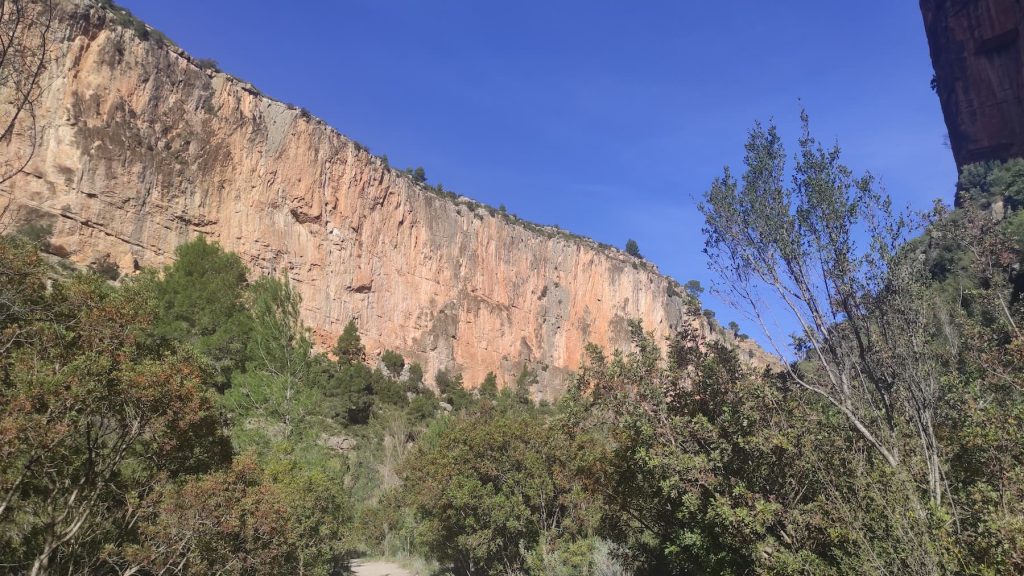
It is a very good fit if you:
- climb mostly between 6a and 7c and want a lot of choice for a week or more;
- like long, vertical, technical routes on small holds that ask for plenty of stamina;
- want to climb in winter, in a T-shirt, while it is grey and cold in northern Europe;
- are happy with a quiet village, self-catering and a rental car.
Think twice if you:
- want sandy beaches and nightlife next to the crag. Chulilla is a village of about 700 people in the mountains, an hour from the nearest beach;
- climb below 5c and want a big choice of easy routes. There are some (Cherales, Miguel Gómez in Pantano and a handful at Fantasía and Los Perros), but most of the best climbing is 6a and above;
- need big boulder fields or trad climbing. The canyon is a sport destination;
- plan to come without a car.
Two honest notes. The older routes near the village are polished, and on some of them the grade can feel stiff. And Chulilla gets busy: at Christmas, Easter and on long weekends the car parks fill early and the village fills up.
When to go, month by month
The high season is winter, and that is not an accident: in January the sun warms the south-facing walls and the rock is dry, while most of the region’s rain falls in autumn, with a second, smaller wet spell in spring.
| Month | What to expect | Where to climb |
|---|---|---|
| October | Warm days, pleasant evenings; autumn rain is possible | Almost everywhere; shady sectors in the afternoon |
| November | Pleasant days, cooler nights, and the season starts in earnest. The long weekend around 1 November already fills the canyon. The first Los Puentes de Chulilla climbing festival took place at the end of November 2025; as far as we know, no date has been set for a second one | Everywhere; the sunny sectors for cooler days |
| December | Very busy on the 6 to 8 December long weekend and over Christmas; cold mornings, mild midday sun | Sunny sectors: La Peñeta, Lamentaciones, Cherales, Fantasía |
| January | Coldest month; daytime highs of about 11 to 14°C (52 to 57°F), mornings close to freezing, cold in the shade | South- and east-facing walls; the sunny afternoon sectors |
| February | Still cool, with longer days; still prime time for the sunny walls | Same as January, plus Pared de Enfrente in the morning |
| March | Mild and often excellent. In 2027 Easter falls early (Easter Sunday is 28 March, and Easter Monday is also a holiday in the Valencia region), so the second half of March will be very busy. Valencia’s Fallas festival (15 to 19 March) also pushes up city hotel and car-hire prices | Almost everywhere |
| April | Warm and pleasant; a good time for the shady Pantano walls | Pantano (Oasis, Chorreras), Pared de Enfrente |
| May | Warming up fast; the season is winding down | Shady sectors |
| June | Hot; early mornings or evenings only | Oasis, Master, Las Cuevas in the shade |
| July and August | Very hot; not a climbing season | Only the shadiest walls, at dawn |
| September | Still hot at first, then the season restarts | Shady Pantano walls |
Rough temperatures. Daytime highs in the village are about 21°C (70°F) in October, 15°C (59°F) in November, 12 to 14°C (54 to 57°F) from December to February, 16°C (61°F) in March, 19°C (66°F) in April, 23°C (73°F) in May and around 30°C (86°F) in July and August. These are modelled averages, a bit cooler than on the coast; winter nights drop close to freezing.
Spanish long weekends. Spanish climbers come in force on the long weekends around 12 October, 1 November and 6 to 8 December, and at Christmas and Easter. If you can, avoid arriving on those days, or book everything well in advance.
A word on rain. Eastern Spain has a weather pattern called a DANA (pronounced «dah-nah»), a cut-off low that can bring sudden, very heavy rain, mostly between September and November. The worst in living memory, on 29 October 2024, killed more than 220 people in Valencia province, most of them in the towns south of the city; Chulilla’s hanging bridges came through undamaged. Another DANA hit the coast south of Valencia in mid-October 2026. If you travel in autumn, check the AEMET weather warnings every day and take any alert on your phone seriously: in Spain, official alerts arrive as an ES-Alert message. After heavy rain, ask locally before going down to the river. In the light-rain days of winter, the roofed and overhanging sectors (Las Cuevas, Competición, Los Techos, parts of the Pared de Enfrente) usually stay dry enough to climb.
A word on wind and temperature. Wind can make a big difference, and the shady walls can feel properly cold on winter mornings. In a sunny sector, expect to climb in a T-shirt by midday even in January. Pack layers.
Getting to Chulilla (and around Valencia)
If you have never been to Valencia, here is the short version. Valencia is Spain’s third-largest city, on the Mediterranean coast. It has an international airport, a good motorway network and car-rental offices at the airport. Chulilla lies inland, in the foothills of the Serranía mountains.
Flying in. The nearest airport is Valencia (VLC), 48 km (30 miles) from Chulilla. Madrid (MAD, 330 km, about 3 hours 45) and Barcelona (BCN, 395 km, about 4 hours) are options if flights are cheaper, and Alicante (about 230 km, 2 hours 30 to 2 hours 45) too. Most visitors fly to Valencia and rent a car at the airport. If you fly into Madrid, the high-speed train to Valencia takes under two hours, and you can hire a car at Valencia’s Joaquín Sorolla station.
Driving.
| From | Distance | Time |
|---|---|---|
| Valencia airport | 48 km | about 45 min |
| Valencia city | 64 km | about 1 h |
| Castellón | 120 km | about 1 h 20 |
| Alicante | 230 km | about 2 h 30 |
| Madrid | 330 km | about 3 h 45 |
| Barcelona | 395 km | about 4 h |
The route is simple. Take the CV-35 motorway (also called the Autovía de Ademuz, toll-free) from Valencia towards Llíria and the mountains. Leave at exit 48, signed for Villar del Arzobispo, Chulilla and Bugarra, and follow the signs for Chulilla past Losa del Obispo. The last 6 km, on the CV-394, are a winding hill road: take it slowly, and remember that the village streets are narrow, so park at the car parks rather than in the village.
Public transport: not practical for climbing. A regional bus service connects Valencia bus station with Villar del Arzobispo, and a connecting line goes on to Chulilla. In practice you arrive in the evening (between about 18:30 and 20:00) and leave in the morning (about 7:30 on weekdays, 8:15 on Saturdays, midday on Sundays), so it does not work for day trips. Every service that arrives in Chulilla runs on request: call the operator, Hispano Chelvana, the working day before (+34 961 985 009, Monday to Friday, 8:00 to 14:00 and 15:00 to 18:00); for a Saturday or Sunday, call before 18:00 on Friday. Timetables change, so check the current one before you plan. There is no train to Chulilla; the Valencia metro (line 2) reaches Llíria, where the evening bus also stops. Rent a car.
Plan for the journey. Do your big grocery shop on the way: the supermarkets are in Llíria and Villar del Arzobispo, just off the CV-35. Chulilla has a small fuel station at the farmers’ cooperative, and there are larger ones in Villar del Arzobispo.
Practical basics for first-time visitors to Spain
- Currency and cards: euros. Cards work in most places in Valencia, but carry cash for Chulilla (car park, small shops, some bars).
- Plugs and power: 230 V, with two round pins (Type C and F). Bring an adapter if you come from the UK, the US or elsewhere, and check that your chargers accept 230 V (most phone and laptop chargers do).
- Time zone: Central European Time (UTC+1 in winter, UTC+2 in summer).
- Driving: on the right. EU, EEA and UK licences are fine. With a US, Canadian, Australian or other non-EU licence, carry an International Driving Permit together with your licence and passport; you have to get it at home before you travel, and rental desks usually ask for it. Most rental companies also ask for a credit card in the main driver’s name for the deposit. Automatic cars are available but cost more, so book early.
- Phone: Spanish numbers start with +34. Roaming is free for EU and EEA SIM cards; UK and other plans may charge, so check before you fly or buy a local eSIM.
- Tap water: safe to drink in Spain.
- Language and road signs: Chulilla is a Spanish-speaking village, but the Valencia region has two official languages, so road signs often show the Valencian names: València, Llíria.
- Daily rhythm: things happen later than you may be used to. Lunch is mostly between 2 and 4 pm, dinner after 9 pm, and many small shops close for several hours in the afternoon and on Sundays.
- Valencia in a nutshell: a large coastal city with mild winters, a historic centre, long beaches, and a big food scene. Paella was born in the Valencia region, and the local drink is «horchata», a sweet tiger-nut drink. You will not need the city for climbing, but it is an easy, rewarding day out.
Where to stay for a week, a month or a whole winter
Chulilla lives off climbing, and the options reflect it. Book early for Christmas, New Year and Easter.
Climbers’ hostel: Albergue El Altico. This is the best-known base for climbers, 200 m from the village on the edge of the canyon. A bed in a shared room costs €18 per person per night, with linen included, and groups or families can book a whole room. There is a shared kitchen, central heating, wifi, parking and a terrace. Rooms sleep 9, 9, 4 and 3 people, so the hostel is small (roughly 25 beds) and fills up. House rules: no food or drink in the rooms, no smoking, and quiet from midnight to 8 am. For a long stay, ask about the price when you book. The hostel is run by Pedro Pons, who with Nuria Martí wrote the local guidebook. Booking: elaltico.com or +34 650 82 92 40.
Rural houses and apartments. The village has about 18 rural houses («casas rurales») and 15 other holiday rentals, plus a small hostel-restaurant, El Pozo. For a stay of several weeks, message the owners directly and ask for a weekly or monthly price. Many are old village houses; check that there is heating in winter.
Camping. There is no campsite in Chulilla. The nearest one, the municipal campsite in Bugarra (about 18 km), closed after the 2024 flood and, as far as we know, was still closed in October 2026. Call before relying on it (+34 607 284 860).
Vans and motorhomes. Camping is not allowed anywhere in the municipality outside authorised places, and that includes setting up chairs, tables or awnings next to a van. The service point in the village (water and waste) is for servicing, not for sleeping. In 2025 the council secured funding for a second motorhome service point. Ask at the tourist office (+34 961 657 979, Calle Las Eras) where overnight stops are tolerated, and read recent comments before choosing a spot.
If the village is full. Villages nearby that work as a base: Losa del Obispo (6 km), Sot de Chera (13 km), Villar del Arzobispo (16 km), Gestalgar (19 km) and Chelva (21 km). Villar del Arzobispo has the most services.
Everyday life in Chulilla
Food. There are about ten bars and restaurants in the village. Goscanos is the climbers’ bar (opening hours vary by season, so check). The traditional local dishes are meat stew («olla de carne»), «rin-ran» and a range of village pastries. Kitchens in small villages often close between lunch and dinner, and several places open only at weekends out of season.
Shops. There is a small supermarket (Spar), a couple of bakeries, a butcher, a household-goods shop and a tobacconist (the «estanco», which sells tobacco and stamps, and here also the local guidebook). There is a pharmacy with short opening hours; for anything at night or on Sunday, ask at your accommodation which pharmacy is on duty. There is no large supermarket in the village; for a big shop, go to Villar del Arzobispo or Llíria. Small shops close in the afternoon and many are closed on Sunday, so buy ahead for the weekend.
Climbing shop. Al Coxinillo Climbing Shop, on the Plaza de la Baronía, sells gear and the local guidebook.
Money. Bring cash. Expect to pay the car park and the access fee in cash, and some small shops prefer it too. As far as we know, the only cash machine in the village is in the municipal auditorium and works only in office hours, so take out money at the airport or in a bigger town on the way.
Phone and wifi. Signal can be patchy inside the canyon, so download your topos and maps before you leave your accommodation. Wifi is normal in hostels and houses in the village.
Health. For emergencies call 112 from any phone (you can ask for an English-speaking operator). The village has a small medical centre (consultorio) on Calle Maestro Amblar, with limited hours (urgent line +34 96 271 83 25). Out of hours, or for anything serious, call 112. The nearest hospital with a 24-hour emergency department is in Llíria, right by the CV-35 on the way back to Valencia, about 35 km and 35 minutes away (+34 96 271 88 00; emergency admissions +34 96 271 88 06). If you are insured in an EU or EEA country or Switzerland, bring your European Health Insurance Card; UK residents, the GHIC. Both cover public healthcare only, so everyone, card or not, should have travel insurance that covers sport climbing and repatriation.
Fees, parking and local rules
| What | Cost and rule |
|---|---|
| Municipal car park on the CV-394 | €4 per car per day, €2 per motorbike, no exemptions. As far as we know, an attendant collects it, mainly at weekends and on holidays; pay in cash and keep the ticket visible |
| Access to the canyon via the hanging-bridges path | €1 per person per day, paid at the control hut at the start of the path. Under-10s, over-65s and registered residents do not pay; there is no exemption for climbers. Walking from the village car park to the village sectors does not take you through the hut. If you enter Pantano from the east via the bridges, carry a coin |
| Fire | Forbidden at any time in the protected area |
| Dogs | On a lead, and not in the water |
| Rubbish | Take it with you |
| Camping | Not allowed anywhere outside authorised places, including camping-style set-ups next to a van; for overnight van stops, ask at the tourist office |
| New routes | Chulilla is inside a protected natural area: consult the forest ranger and the local climbers before bolting |
| Breeding-season closures | As far as we know there are no published climbing closures in Chulilla. The canyon is a protected area with its own rules, so follow the signs on site and, before you go, check the notices of the Valencian mountaineering and climbing federation (FEMECV) and of Montaña Regulada, the Spanish database of climbing restrictions |
Summer fire risk. On days of extreme fire risk (level 3 of the regional fire alert, «preemergencia nivel 3»), walking on forest paths is banned across the Valencia region, and that includes most crag approaches. It happened on several days in July and August 2026. If you come between June and mid-October, check the day’s level before you set off, or ask at your accommodation.
How the canyon is laid out
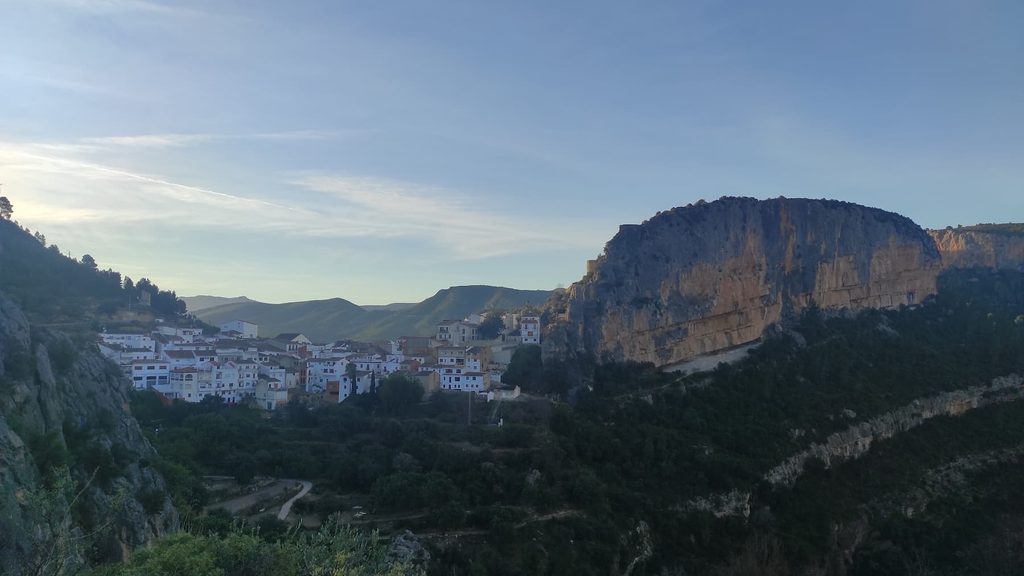
Chulilla is not one crag; it is a series of walls strung along the Turia river. The sectors fall into five areas.
| Area | Main sectors | What it offers | Approach |
|---|---|---|---|
| Village (Boca de la Voz) | Los Perros, La Ceguera, Competición, Los Techos, Lamentaciones, La Peñeta, Las Cuevas, Pared de Enfrente | The classic zone: more than 400 routes, many grades, many orientations | From under 5 to 30 minutes from the car park |
| Pantano | Oasis, Chorreras, Cañaveral, Balcón, Balconcito, Pared Blanca, Master, Nanopark | The heart of Chulilla’s 7s and its hard routes, in the gorge towards the Loriguilla dam | 5 to 30 minutes depending on the sector |
| Barranquillo-Falfiguera | Palmeral, Tesoro, Frailecico, Peña del Reloj, Territorio Hostil | Mostly north-facing; short routes at Tesoro, long ones at Palmeral | From the car park by the Barranquillo bridge, a small footbridge and a path; 20 to 30 minutes to Palmeral |
| Tabaira | Fantasía, Pesadilla, Colmillo, Tragapo | Fantasía is the classic easy zone; Pesadilla is more serious | Drive to a layby on the CV-395, about 2 km from the village; 8 to 20 minutes on foot |
| Cherales | Cherales, Aitana | Cherales gets sun most of the day and is the place for the easiest grades; Aitana, a separate sector, faces northwest | Dirt track and 8 to 20 minutes on foot |
Tabaira and Cherales are a few minutes’ drive from the village; the others are in or next to the canyon.
Route counts below are approximate, because each sector counts the «extensions» separately. Grades are French; there is a conversion table further down. Some of the older, polished routes can feel stiff for the grade.
The village sectors
| Sector | Sun and orientation | Routes | Grades | Height | Notes |
|---|---|---|---|---|---|
| Los Perros | East; morning sun | ~25 | 5a-8b | 6-18 m | Short, almost high-boulder routes; under 5 minutes; a water tap at the car park |
| La Ceguera | Southeast; morning sun | ~28 | 5c-8b | 18-35 m | The right-hand side has easy routes and tree shade at the base; family-friendly; polished |
| Competición | West; afternoon sun | ~33 | 5c-8a | 8-33 m | Roofs and overhangs, shelter from light rain; mostly 7s |
| Los Techos | Dry in the rain | ~13 | 6a-8b | up to 35 m | Roofs with extensions and hard routes |
| Muro de las Lamentaciones | East-southeast; sun until 13:30-15:00 in winter | ~23 | 6a+-7b+ | up to 35 m | A limestone wall above the river with a steady progression from 6a+ to 7b+; steep 10-20 minute walk |
| La Peñeta | South and southwest; midday and afternoon sun | ~78 | 5b-8a+ | up to 55 m | A winter classic next to the village; extensions and short, easy multi-pitch routes |
| Las Cuevas (Tío José, La Nevera, Los Riscos) | Northwest; always shady | ~50 | 5a-8c | 10-32 m (up to 57 m on the multi-pitch routes in La Nevera) | Dry in the rain; short, strong routes in Tío José; adventure routes in La Nevera |
| Charco Azul | West; afternoon sun | ~26 | 6c+-8a | up to 65 m | Long routes and 60 m extensions |
| Moratón, Odín, Sonrisas-killer, Más Allá, El Canal | Mostly west, afternoon sun | 6-22 each | 4b-8a+ | up to ~48 m | Sectors between Competición and the Charco Azul, 10 to 20 minutes’ walk; Moratón stays dry in light rain |
| Rogelio and Rogelio Mastrolindo | West; afternoon sun | ~16 | 6a-7a | up to 70 m | Two- and three-pitch routes in the 6s |
Pared de Enfrente
The «wall opposite» is the big cliff across the river from the village, directly facing the El Altico hostel. You cross the river and climb up to it, and it catches the morning sun.
| Sector | Sun and orientation | Routes | Grades | Height | Notes |
|---|---|---|---|---|---|
| Tierra de nadie | East; morning sun | ~17 | 6b+-8a | 25 m | Cantalobos, Aromas del Verdon; dry in the rain |
| El Ramallar | East; morning sun | ~23 | 6a+-8a+ | up to 50 m | The place for 7c to 8a, plus Los Franceses, a superb 7b+ |
| Sex Shop | Southeast; morning sun | ~17 | 5c-8a | up to 40 m; 67 and 70 m on the multi-pitch routes | Orgasmatrón (5c, four pitches) and La Diagonal (6c+, two pitches); dry in the rain |
| Diedros | East | ~24 | 6b+-8b | up to 40 m | Longer approach, 20 to 30 minutes; dry in the rain |
| Fernan Wall | Morning sun | ~10 | 6b-7c | 30-66 m | A small sector with two two-pitch routes |
Pantano
Pantano is where the hard routes live. You reach it from the west by a track and a metal bridge (the short way to Oasis and Chorreras), or from the east by walking across the hanging bridges (longer, towards Miguel Gómez, Nanopark and Balcón). A lot of the walls face north and give shade, though Cañaveral, Nanopark and Naranjito face southeast and get sun in the morning or around midday.
| Sector | Sun and orientation | Routes | Grades | Height | Notes |
|---|---|---|---|---|---|
| Oasis | Northwest; shade until 17:00 in summer | ~47 | 6a+-8a | 18-60 m | One of the busiest sectors; technical, small holds; classics from 6c to 7b |
| Chorreras | Northwest; shade | ~43 | 6b+-8a | 25-60 m | Tufas and stalactites; long, photogenic routes with 50-60 m extensions; not for children |
| Cañaveral | Southeast; sun 12:00-15:00 | ~52 | 6a-8c+ | up to 53 m | The very hard sector, with many 50 m extensions |
| Balcón and Balconcito | Balcón stays dry in the rain | ~30 and ~45 | 7b+-8c+ | 30-70 m | Overhanging tufas with boulder starts; Tequila Sunrise |
| Pared Blanca (Monte de Venus) | Morning shade, sun late in the afternoon; no sun in winter; dry in rain | ~44 | 6a-8c | up to 63 m | Almost vertical and technical; Siempre se puede hacer menos |
| Algarrobo | Dry in the rain | ~23 | 7a-8b+ | up to 40 m | Gently overhanging, small holds and tufas |
| Nanopark | Southeast; morning and midday sun | ~30 | 7b-8a | 25-55 m | Almost all 7s |
| Master and Serengueti | Northwest; shade all day | ~24 and ~11 | 6b-8a | up to 57 m | Master was equipped in 2015, many 45 m routes; not for children |
| Lorito, Ca Germá, Peppoli e Pepino | Ca Germá faces southeast; morning and midday sun | 14-22 each | 6a+-7c | 30-85 m | Sectors of 7s; Ca Germá has El ocaso de los johnnys, a 6a+ in three pitches and 85 m |
| Jumanji (La Fuente), Naranjito, Miguel Gómez | Naranjito faces southeast; Miguel Gómez faces northwest with afternoon sun | 7-22 each | 4c-8b | 15-40 m | Miguel Gómez has 4c to 6b routes, the easiest in Pantano, and is child-friendly |
Tabaira, Barranquillo-Falfiguera and Cherales
| Sector | Sun and orientation | Routes | Grades | Height | Notes |
|---|---|---|---|---|---|
| Fantasía | Morning and midday sun; shade in the afternoon | ~60 | 5a-7b+ | 10-42 m | The classic easy sector, mostly 6a to 6b with some 5s; the grades are not soft; a short 3 m scramble with a fixed rope on the path |
| Pesadilla | Southwest; midday and afternoon sun | ~30 | 5c-8a | up to 42 m | More serious; not recommended with children |
| Colmillo and Tragapo | Colmillo gets midday and afternoon sun | ~6 and ~13 | 5c-7b | 23-30 m | Small sectors near Tabaira |
| Palmeral | East; morning sun | ~32 | 6a+-8a | 25-60 m | A newer sector with long routes; 60 m extensions |
| Tesoro | Mostly shady, with sun at midday | ~33 | 5a-7a | up to 25 m | Grey limestone, short routes, a lot of 6a to 6c: a good day out |
| Frailecico and Peña del Reloj | Frailecico faces north; Peña del Reloj faces southeast, sunny until 15:00 in winter | ~23 and ~19 | 5b-7c+ | up to 30 m | Orange streaked walls |
| Territorio Hostil, Trosken, Pinturas Rupestres | Mostly north-facing | 7-18 each | 6a+-8a+ | up to 38 m | The harder side of Barranquillo |
| Cherales | Southwest; sun most of the day, especially in the afternoon | ~70 | IV-7a+ | up to 40 m | Beginners’ sector between IV and 6a, good in winter; long dirt track |
| Aitana | Northwest | ~13 | 3-7a | up to 50 m | A separate sector, 20 minutes’ walk; not for children |
Sun, shade and rain: choosing a crag
Because the walls face every direction, you can almost always find the right conditions.
| Conditions | Best sectors |
|---|---|
| Cold winter day, you want sun | La Peñeta (south, southwest), Lamentaciones (sun until 13:30-15:00), Cherales, Fantasía, Los Perros and La Ceguera (morning), Sex Shop and Pared de Enfrente (morning) |
| Mild day | Anywhere; choose by the time of day |
| Hot day | Oasis (shade until 17:00), Chorreras, Master and the north-facing walls of Pantano; Las Cuevas (Tío José, La Nevera, Los Riscos), always in the shade |
| Sunny afternoon | Competición, Charco Azul and Rogelio (west), Pesadilla, Cherales, Pared Blanca (not in winter) |
| Light rain | Las Cuevas, Los Techos, Competición, Moratón; in Pared de Enfrente, Tierra de nadie, Sex Shop and Diedros; in Pantano, Balcón, Algarrobo and Pared Blanca |
| Children | The right-hand side of La Ceguera and Miguel Gómez (Pantano); also Cherales, Los Perros and Fantasía (mind the short roped step on the Fantasía path); not Pesadilla, Chorreras, Frailecico or Aitana |
French grades, in plain English
Spanish topos and the local guidebook use French sport grades. This is an approximate conversion to the American YDS scale.
| French | YDS | French | YDS | French | YDS |
|---|---|---|---|---|---|
| 5a | 5.7 | 6c | 5.11a/b | 7c+ | 5.13a |
| 5b | 5.8 | 6c+ | 5.11b/c | 8a | 5.13b |
| 5c | 5.9 | 7a | 5.11d | 8a+ | 5.13c |
| 6a | 5.10a | 7a+ | 5.12a | 8b | 5.13d |
| 6a+ | 5.10b | 7b | 5.12b | 8b+ | 5.14a |
| 6b | 5.10c | 7b+ | 5.12c | 8c | 5.14b |
| 6b+ | 5.10d | 7c | 5.12d | 8c+ | 5.14c |
On the easiest routes you will also see Roman numerals, an old Spanish habit: IV is roughly 4b (5.6), V roughly 5a to 5b (5.7 to 5.8) and V+ roughly 5c to 6a (5.9 to 5.10a). Grades are subjective anyway: if you mostly climb indoors, start a grade or two below your usual level for the first days, especially on the polished classics.
Which crags for your grade
Up to 6a/6b: easy routes and warm-ups
- Cherales: sun most of the day, IV to 6a routes that are well equipped, and a quiet setting. The best place to start in winter. The dirt track is long, so set out early.
- Fantasía: long routes at 6a and 6b, popular, with morning and midday sun. There is a short 3 m section with a rope on the approach path.
- La Ceguera, right-hand side: 18 m routes from 5c to 6b+, under 5 minutes from the car park, with tree shade at the base.
- Los Perros: routes of 6 to 12 m from 5a to 6a+, almost like high boulder problems.
- La Peñeta: a good place for your first two-pitch routes, such as Neumonía (5b), Aitana (5c; not to be confused with the Aitana sector at Cherales) and Hechizo de luz (6a).
- Sex Shop: Orgasmatrón (5c) is a four-pitch route, for people who already know how to build belays and abseil.
6b to 6c+: the heart of the trip
- Muro de las Lamentaciones: a perfect progression from 6a+ to 6c+ before you move into the 7s.
- La Peñeta: extensions of 6b to 6c+, 36 to 50 m long.
- Chorreras: Long Dong Jhon (6b+) and Todo por el club (6c+) are two classic ways into the tufas of Pantano.
- Oasis: Los pagafantas (6a+), Magnetoresistencia gigante (6b+) and El Chamarilero (6c+).
- Palmeral: long 40 m routes from 6b to 6c+, with morning sun.
- Tesoro: a full day between 6a and 6c.
7a to 7b+
- Oasis and Chorreras: the heart of Chulilla’s 7s, in the shade.
- Competición: 7a to 7c on steep, roofy rock that shrugs off light rain, with afternoon sun.
- Pared de Enfrente: Tierra de nadie, Sex Shop and Los Franceses (7b+) at El Ramallar, with morning sun.
- Tío José: 7a and 7b in permanent shade, dry in the rain.
- Cañaveral: extensions at 7a+ and 7b+ with sun from 12:00 to 15:00.
7c to 8a and beyond
- El Ramallar and Diedros: 7c to 8a+ with morning sun.
- Los Techos: 7c to 8b under a roof.
- Balcón and Balconcito: 8a to 8c+ on overhanging tufas.
- Cañaveral, Balconcito and Pared Blanca: the hardest routes in Chulilla, from 8b to 8c+.
Plans for one to four weeks
You will not tick the whole canyon in a week, so here are some ways to organise a trip. Each plan assumes you need rest days; with sport climbing on small holds, a rest day every third or fourth day works well.
Your first day (any grade)
Do not start in a sector far from the car. Begin with a short warm-up day at La Ceguera (right-hand side) or Los Perros, less than 5 minutes from the village car park, or at Cherales if you want something easy in the sun. Use the day to learn how the grades feel and to see how polished the older routes are.
One week at 6a to 6c
- Day 1: Fantasía in the morning (sun), then the right-hand side of La Ceguera in the afternoon; on a cold day, finish at La Peñeta instead, which gets the afternoon sun.
- Day 2: Muro de las Lamentaciones, from 6a+ to 6c+; go in the morning, as it loses the sun between 13:30 and 15:00 in winter.
- Day 3: La Peñeta, with one extension or a short multi-pitch route, then explore the village.
- Day 4: Rest day: the hanging bridges walk or the Charco Azul.
- Day 5: Oasis (the easier routes) or Chorreras (Long Dong Jhon, Todo por el club) on a mild day; in a cold spell, go to La Peñeta or Lamentaciones instead.
- Day 6: Tesoro or Palmeral.
- Day 7: Cherales for a relaxed finish, or a repeat of your favourite.
One week at 7a to 7c
- Day 1: Competición (afternoon) or Tierra de nadie (morning).
- Day 2: Oasis and Chorreras, in the shade: ideal in autumn and spring; on a cold winter day, swap them for La Peñeta or the Pared de Enfrente in the morning.
- Day 3: El Ramallar or Cañaveral, depending on the sun.
- Day 4: Rest day.
- Day 5: Tío José (shade, dry in the rain) or Sex Shop.
- Day 6: Nanopark (morning and midday sun) or, on a hot day, Master (shade all day).
- Day 7: Project day on your best route.
Two to four weeks: how to pace a long trip
1. Spend the first week on volume. Climb a lot of routes a grade or two below your limit. The polished classics near the village are good for this.
2. Choose a project in week two. Pick one or two routes in your grade range where you can try several times. Pantano and the Pared de Enfrente are the places for this; each has a wide choice from 7a to 8a+.
3. Rotate your sectors. Use the sun table above. On cold mornings go to the sunny sectors; when it is warm, go to the shade.
4. Add something different every week. Try a multi-pitch route such as Orgasmatrón, do the hanging bridges walk, or drive to a different crag for a day.
5. Keep a rain-day plan. Know the dry sectors (Las Cuevas, Los Techos, Competición, Sex Shop) and a few climbing walls in Valencia city (see the rest-day section).
6. Leave a margin. Fingers on small holds need recovery, and it is easy to overdo it in the first ten days.
Must-do routes by grade
Each line gives the route, the sector, the length and the grade, from easiest to hardest.
First routes (IV to 6a):
- Pelusín Cherales, 12 m, IV
- El ginebro erecto Cherales, 22 m, V/5b
- Alta tensión Cherales, 20 m, V+/6a
- Moko Los Perros, 8 m, 5a
- Orgasmatrón Sex Shop, 67 m, 5c, four pitches
- Neumonía La Peñeta, 52 m, 5b, two pitches
- Hechizo de luz La Peñeta, 50 m, 6a, two pitches
- Champagne para todos Fantasía, 36 m, 6a (with the extension; the first part is 5c)
The 6s (6a+ to 6c+):
- Elvis Costelo La Peñeta, 32 m, 6a+
- Annie Hall La Peñeta, 45 m, 6b
- Long Dong Jhon Chorreras, 38 m, 6b+: one of the best-known classics in the canyon, full of tufas
- Ibiza connection Lamentaciones, 35 m, 6b+
- El ramallito Lamentaciones, 35 m, 6c
- Presiscrack Lamentaciones, 35 m, 6c/c+
- Todo por el club Chorreras, 25 m, 6c+
- La Diagonal Sex Shop, 70 m, 6c+, two pitches
The 7s (7a to 7b+):
- Plan Z dos Oasis, 28 m, 7a
- El muro de las lamentaciones Lamentaciones, 35 m, 7a
- Blue agave Lamentaciones, 35 m, 7a
- Sendero Luminoso Chorreras, 37 m, 7a
- Sendero sinuoso Oasis, 35 m, 7a+
- Uno más Competición, 32 m, 7a+
- La paz del borrego Chorreras, 38 m, 7b
- Animula vagula blandula Oasis, 34 m, 7b
- Los Franceses El Ramallar, 35 m, 7b+
- Nikita Competición, 30 m, 7b+
Hard 7s and 8s (7c to 8a+):
- Los caminantes Chorreras, 55 m, 7c (extension)
- Un día llamado milagro Oasis, 38 m, 7c
- Aromas del Verdon Tierra de nadie, 16 m, 7c+
- Tequila Sunrise Balconcito, 38 m, 8a: one of the great 8a classics of the canyon
- Entre Dos Caminos El Ramallar, 30 m, 8a
- Altos guapos y fuertes Pared Blanca, 40 m, 8a
- Vivir los 90 Los Techos, 35 m, 8a
The hardest routes (8b to 8c+):
- Obsesión por la extensión Algarrobo, 35 m, 8b+
- Primer asalto Balcón, 32 m, 8c
- Siempre se puede hacer menos Pared Blanca, 63 m, 8c (proposed 8c+)
- Ningal and Moretti 66 Cañaveral, 8c+
- La montaña mágica Balconcito, 55 m, 8c+ (extension)
As far as we know, the hardest routes in Chulilla are 8c+, and there is no 9a here yet.
Multi-pitch and adventure routes
Most of Chulilla is single pitch. When you see «(L1+L2)» next to a route name, it usually means an «extension»: a joined-up version of two routes that is graded from the ground, not a true multi-pitch route. Real multi-pitch routes are few:
- Orgasmatrón (Sex Shop): 5c, 67 m, four pitches. Two abseils with a 70 m rope.
- La Diagonal (Sex Shop): 6c+, 70 m, two 35 m pitches.
- Neumonía, Aitana and Hechizo de luz (La Peñeta; the Aitana route is not the Aitana sector at Cherales): two pitches each, 5b, 5c and 6a. Kaos cósmico (6b, three pitches) has rockfall warnings.
- La nevera del Diablo (La Nevera): 57 m and four pitches; the first three are aid at A0 and the last is 5a. Las arañas de Marte (6b+, three pitches, 45 m) is in the same sector.
- Rogelio (Charco Azul, facing west): Rogelio (6a, 70 m, three pitches) and Roca limpia (6c+, 66 m, three pitches). In Rogelio Mastrolindo there are two-pitch routes of 50 to 60 m between 6b+ and 6c, such as Sueños de libertad.
- Fernanwall (Fernan Wall, Pared de Enfrente): 6b, 66 m, two pitches, bolted in 1996; mind the long run-out between the third and fourth bolt.
- El ocaso de los johnnys (Ca Germá, Pantano): 6a+, 85 m, three pitches.
- Plan Z dos (Oasis): a rarity, two pitches graded separately, a 7a of 28 m with an 8a above it, 55 m in all.
The horizontal traverses. Chulilla has two giant horizontal big-wall traverses, one on each side of the canyon. Las Reglas del Juego (550 m, 20 pitches, A2+/6a) crosses the Pared de Enfrente; it was completed without touching the ground on 5 to 7 April 1996. Chulilla Experience (about 1,036 m) crosses the wall on the El Altico side of the canyon, opposite the Pared de Enfrente, and was finished in August 2022 by David Palmada «Pelut» and Álex Pastor after four years of work. These are serious aid-climbing projects, not trip ideas.
What to pack
- Rope: 80 m. Many classics are 35 to 40 m long, which is at or beyond the limit of a 70 m rope. In the longest extensions there is often an intermediate anchor at about 40 m, so you can lower in two stages. Always tie a knot in the end of the rope.
- Quickdraws: 16 to 18; a few more for long extensions.
- Helmet: a good idea everywhere. In a busy canyon, other climbers and walkers above you can knock loose stones, and a few routes carry rockfall warnings.
- Chalk and a brush: the polished routes need a clean hold.
- Layers. The sun is strong at midday and the shade is cold.
- Headlamp, water, snacks: some approaches take up to 30 minutes, and in December the sun sets before 18:00, earlier still in the canyon. There is a drinking-water tap at the Los Perros car park and a fountain in the Plaza de la Baronía.
- A topo: buy the local guidebook or download the topos in advance.
Safety and good manners
- Emergency: 112. Check that your insurance covers sport climbing in Spain.
- Polished rock: on the busiest routes the holds are slippery, especially on the first metres. Warm up properly.
- Rockfall: wear a helmet below others, and be careful on the polished classics after rain.
- Anchors: check anchors and carabiners on less-used routes, and if something looks worn or loose, mention it at the climbing shop in the village.
- The environment: no fire, no graffiti, no litter, dogs on a lead.
- Cars: park only in authorised places and do not block the road to the car parks.
- Quiet: the village is small. Respect quiet hours, especially at night.
Rest days and things to do
Chulilla is worth seeing even if you do not climb.
- The Ruta de los Pantaneros (the hanging bridges). The village’s best-known walk: 5 to 10 km depending on how far you go (the short loop to the bridges takes about two and a half hours), with two suspension bridges across the canyon and a medium-to-hard rating. You do not need to book. The path was built by the workers («pantaneros») who built the Loriguilla dam in the 1950s and 1960s, and the original bridges were swept away by a flood in 1957. The bridges you cross today date from 2013. The €1 access fee is charged here.
- The Charco Azul. A turquoise pool in the Turia, held back by an old irrigation weir, reached by a signed circular path of about 3.7 km (the SL-CV 74; 1 to 2 hours with stops), suitable for children. People swim here in summer, but the water is cold. The old wooden walkway by the water is closed and unsafe, so stay on the marked path. Locals say the name comes from that weir, an «azud» in Spanish, a word of Arabic origin.
- The castle. A fortress of Islamic origin above the village, later a residence and a prison for churchmen. Ask the tourist office about opening times.
- Sot de Chera, Chelva and the Peña Cortada aqueduct. Nearby villages and walks for a day out. The nature park around Sot de Chera suffered badly in the 2024 flood, so ask which paths are open.
- The old spa. The Fuencaliente spa, by the river a few kilometres from the village, has been closed for over a decade and was damaged again in the 2024 flood; do not plan around it.
- Valencia city for a day. Valencia is an hour away and works well for a day off. The old town, the beaches, the City of Arts and Sciences and the central market are the classic highlights, and it is the home of paella. For a rainy day, the city has several indoor climbing walls and bouldering gyms; Laif Climbing Gym is a large one.
- Other activities. Local adventure companies run kayak trips on the Loriguilla reservoir, canyoning and guided walks; ask at the tourist office.
A little history
Chulilla is much older than its climbing. The castle above the village dates back to Islamic times, and in 1248 King James I of Aragon granted the castle and the town to the knight Pere Escrivà. The climbing story is more recent:
- 1988. A climbing competition held in the canyon in November 1988 is still remembered as a legendary event.
- 1990. Pedro Pons opened Alien Sex Fiends at La Ceguera, one of the first grade 8 routes in the canyon. He later won the 2000 Bouldering World Cup.
- 1996. Las Reglas del Juego is climbed in one push.
- 2009 to 2011. The council invested 30,000 euros, with regional tourism money, in 48 new routes on the Pared de Enfrente (mostly 7s and 8s), and in 2011 approved over 268,000 euros of European funds to rebuild the Pantaneros path and improve access.
- 2012. A big wildfire burned about 5,500 hectares of the region. The canyon itself was spared; around 50 of the roughly 700 routes then existing were affected, most of them rarely climbed.
- 2012 to 2015. The hanging bridges are rebuilt (2013) and new sectors such as Lamentaciones, Master and Pared Blanca add a huge amount of climbing; as far as we know, they are graded a little more generously than the old sectors. On 30 December 2014, the Slovenian climber Klemen Bečan made the first ascent of Siempre se puede hacer menos, onsight, and proposed 8c+; Daniel Jung made the second ascent in February 2015.
- 2025. The first «Los Puentes de Chulilla» festival, with a climbing rally and talks, drew around 400 people at the end of November.
Part of the re-bolting today is paid for by the sales of the local guidebook.
Guidebooks and topos
- The printed guide: Chulilla Climbing Guide, 2025 edition, by Nuria Martí and Pedro Pons, in Spanish and English. It is on sale at the Al Coxinillo shop, at the tobacconist and at El Altico. The profits go to re-bolting.
- Online topos: theCrag, climbmaps and 27crags have topos for many sectors; download them before you go.
- Tourist office: Tourist Info Chulilla (+34 961 657 979), Calle Las Eras. Opening hours vary, so call ahead.
Your first trip? Climb with a qualified guide
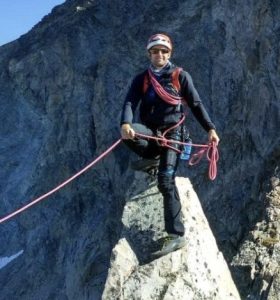
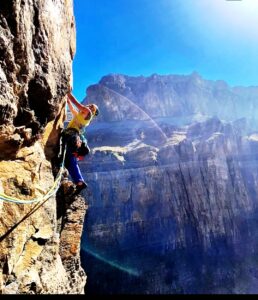
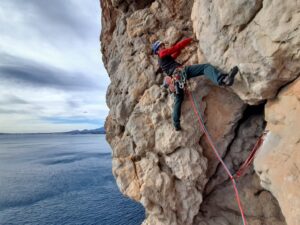
If you are new to Spanish limestone, or you want to make the most of a short trip without spending half a day finding the right wall, a qualified mountain guide is a fast way to get started. They know where the sun and shade will be on the day you go, can take you to the right sector for your grade, and can teach you how to handle the long routes and abseils.
Contact the local professionals directly.
Climb in Chulilla with qualified guides
If you want help planning the week, choosing sectors, working on a project or taking your first steps on rock safely, you can contact qualified guides who work in Chulilla and the Valencia region, and browse their courses and activities, through Destino Climbing.
Frequently asked questions about climbing in Chulilla
How many routes are there in Chulilla?
More than 1,300 catalogued routes in roughly 59 sectors; the local guidebook counts more than 1,400. They range from grade 3 to 8c+, with the most routes in grade 7 and plenty of 6s.
When is the best time to climb in Chulilla?
October to June, with winter the high season. Autumn and spring are good for the shady walls; winter is best for sunny ones. Summer is too hot except at the shadiest crags at dawn.
Do I need a car?
Yes. Rent one at Valencia airport. The bus does not work for day trips, there is no train to Chulilla, and the crags are some distance from each other.
Do I have to pay to climb in Chulilla?
Climbing is free, but there are fees. The municipal car park costs €4 per car per day. If you enter the canyon by the hanging-bridges path, there is a €1 per person per day access fee, and climbers pay it too. The sectors reached from the village car park do not pass through the fee hut.
What rope length do I need?
80 m. Many routes are 35 to 40 m long, in Pantano and also near the village (Lamentaciones, the La Peñeta extensions), and a 70 m rope will not get you down from them. On the longest extensions there is usually an intermediate anchor at about 40 m. Bring 16 to 18 quickdraws and a helmet.
Where is the best place to stay?
For climbers, El Altico hostel (€18 per person per night in a shared room) is the classic base; the village also has around 18 rural houses and 15 other holiday rentals. There is no campsite in Chulilla, and camping is not allowed outside authorised places; for an overnight stop in a van, ask at the tourist office.
Is Chulilla good for beginners or families?
There are good easy areas: Cherales, Fantasía, the right-hand side of La Ceguera, Los Perros and Miguel Gómez. Most of the best routes are 6a and above, and the walls near the village are polished. If it is your first time on rock, go with a qualified guide.
How hard are the routes? Are the grades soft?
It depends on the sector. As far as we know, the newer sectors are graded a little more generously than the old ones, and the polish on the older classics near the village can make them feel stiff. Fantasía is not soft either. Give yourself a day or two to adjust.
What is the hardest route in Chulilla?
As far as we know, the hardest routes are 8c+: Ningal and Moretti 66 at Cañaveral and La montaña mágica at Balconcito. Siempre se puede hacer menos at Pared Blanca was proposed at 8c+ and is often listed as 8c.
Are there closures for bird nesting?
As far as we know, no climbing closures are published for Chulilla. Check local signs and the regional mountain federation before you go.
What should I do on a rest day or when it rains?
Walk the hanging bridges or the Charco Azul, visit Valencia city, or use an indoor climbing wall in Valencia. On a light-rain day, climb at one of the dry sectors (Las Cuevas, Los Techos, Competición, Sex Shop).
Informational guide written for Destino Climbing. Data on routes, grades, access, fees and closures are indicative and change over time; check the current regulations and the real condition of each sector before you go. Last reviewed: October 2026.