Los Galayos Climbing: Granite Trad Needles in Gredos
Climb and learn with a certified local guide Tell us your plan →
High on the south side of the Sierra de Gredos, two and a half hours’ walk above the village of Guisando, a forest of granite needles rises out of the mountainside: more than forty towers between 2,000 and 2,200 metres, laced with hundreds of crack lines, corners, chimneys and friction slabs. This is Los Galayos, the cradle of Spanish classic climbing and one of the most beautiful trad arenas in Europe. There are no bolts to speak of up here. You place your own gear, you top out on real summits, and you abseil back into one of the wildest cirques in central Spain.
Contents13 sections
Los Galayos at a glance
- Where: Sierra de Gredos, above Guisando (Ávila), about two hours west of Madrid.
- Rock: superb, compact granite.
- Style: classic trad. Routes are essentially unbolted; you protect them with cams and nuts.
- Routes: hundreds, spread across more than forty needles.
- Grades: from IV to 7a+, with the bulk between IV and V+.
- Signature summit: Torreón de los Galayos (2,124 m).
- Base camp: Refugio Victory (1,970 m), directly opposite the towers.
- Approach: about 2.5 hours on the PR-AV 43 trail, plus 30 to 45 minutes to the routes.
- Season: spring to autumn.
What the climbing is like
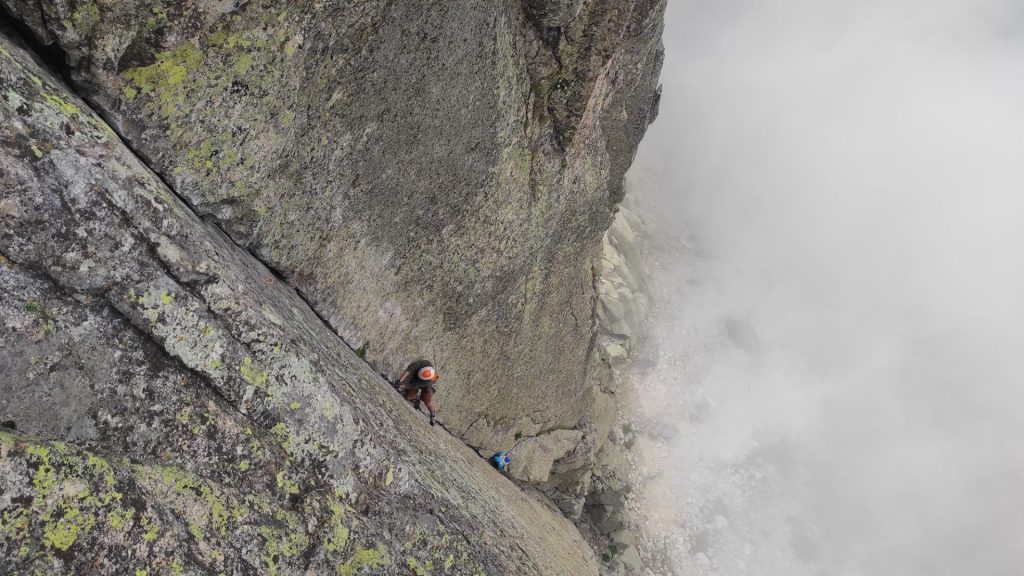
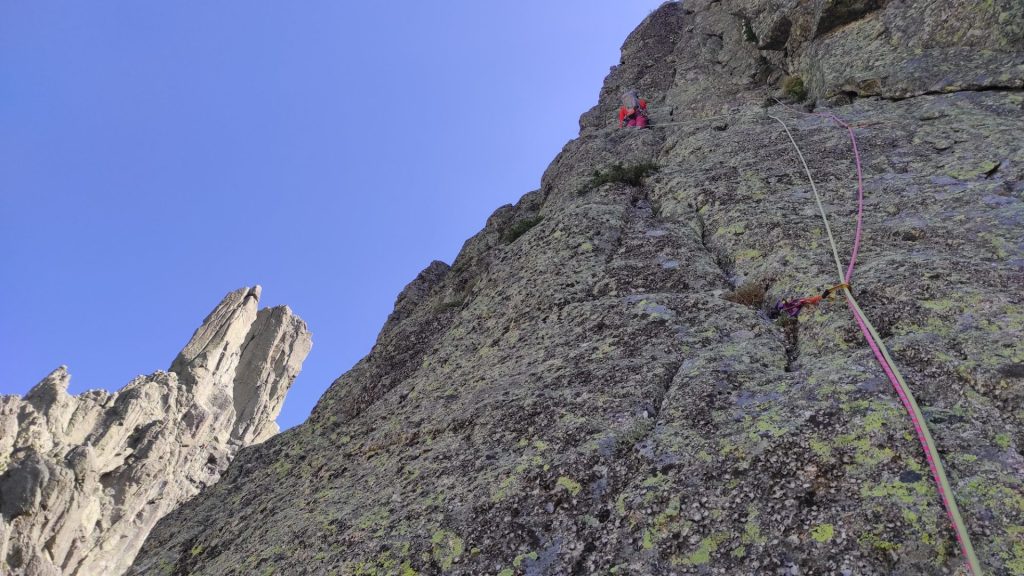
Los Galayos is pure trad on excellent granite. The signature terrain is the crack in all its sizes (fingers, hands, fists), linked by clean open-book corners, chimneys and friction slabs where everything comes down to your feet. Routes are essentially unbolted: you protect them with your own rack, following a clean-climbing ethic the locals have defended for decades. Power drills are not welcome here, and that is precisely why the place has kept its soul.
Most classics sit between grade IV and V+, with harder lines up to 6b and 7a+ on the outlying crags. Do not let the friendly-looking numbers fool you: the commitment is high even on the easy routes. This is mountain climbing with real walk-ins, route-finding, gear placements and abseil descents, not a venue for your first trad lead. If cracks and cams are new to you, this is exactly the kind of place to hire a guide (more on that below).
The towers
Each needle has its own character. Four names dominate every tick list:
Torreón de los Galayos (2,124 m)
The queen of the massif: a slender, airy tower whose silhouette appears on the crest of the Spanish mountaineering federation. The summit can only be left by abseil, and standing on it is a rite of passage for every Spanish mountain climber.
Gran Galayo (2,216 m) and Pequeño Galayo
The highest tower of the group and its smaller neighbour, home to some of the most repeated moderate lines, including beautiful open-book corners and the classic ridge that links both summits in one outing. The Espaldar del Gran Galayo also hides the Cresta de la Catedral, considered the finest ridge traverse in Gredos.
Aguja Negra
The biggest wall of the cirque, with routes around 300 metres long. Its Oeste Clásica, opened in 1957 with barely ten pitons on the entire route, is the natural step up for anyone solid at grade V who wants a full mountain day on magical granite.
Punta María Luisa and the rest
Home to the much-loved Rivas-Acuña and the demanding Diedro Ayuso. Beyond them wait the Torre Rosblanc, the Torre Marian, the Punta Tonino Re, the Puntas Gemelas and nearby crags like Las Berroqueras and the Peña del Águila, where the hardest climbing of the area lives.
The classic routes
These are the most sought-after lines, chosen for the quality of the climbing and the views from each summit. Grades and lengths are approximate; check an up-to-date topo before you climb.
- Sur Clásica, Torreón (V/V+, 130 m, 4 pitches). The essential route of Los Galayos and the most reasonable way to the area’s emblematic summit. Sustained, atmospheric, unforgettable.
- Pequeño to Gran Galayo ridge (V+). A gorgeous, complete outing linking two needles at a contained difficulty.
- Gran Diedro, Gran Galayo (IV+, 100 m). An aesthetic corner of moderate difficulty, the classic first taste of Gredos granite.
- Oeste Clásica, Aguja Negra (V, 300 m, 6 pitches). Long, beautiful climbing on generous holds with good gear. A full day you will remember for years.
- Rivas-Acuña, Punta María Luisa (V, 130-160 m). Varied, highly recommended, magnificent position.
For those chasing harder lines
- Underground / Diedro Malagón, Torreón (V+/6a, 150 m). A sustained vertical crack straight to the summit; solid jamming and gear skills required.
- Diedro Ayuso, Punta María Luisa (6b, 160 m). A corner that tests your endurance and your trad reading.
- Vía de Las Tormentas, Las Berroqueras (V+). Quality climbing on one of the area’s most characterful crags.
- Lynyrd Skynyrd / Tiempos de Cambio, Peña del Águila (7a+). The hardest the area offers, for strong climbers at home in adventure terrain.
Remember that on these routes the grade is only part of the equation: the trad protection, the exposure and the length push the commitment well above what the same number would mean at a sport crag.
Route list by needle
A selection of the best-documented routes on each tower, ordered from easiest to hardest, with length and grade. The massif holds many more lines than these; always check a current topo and the condition of the route before setting off.
Torreón de los Galayos (2,124 m)
- Lucas, 100 m, V
- Sur Directa / Sur Clásica, 150 m, V+
- Underground / Diedro Malagón, 150 m, V+
- Norte Clásica, 60 m, 6c+
- La Rosa de los Vientos, 170 m, 7a+
Gran Galayo (2,216 m)
- Vía Comicci, 190 m, IV
- Gran Diedro, 100 m, IV+
- Vía Comicci directa, 190 m, V+
Pequeño Galayo
- Sur de la Apretura, 150 m, V+
- Oeste, 150 m, V+
Aguja Negra
- Oeste Clásica, 300 m, V
Punta María Luisa
- Rivas-Acuña, 130 m, V
- Diedro Ayuso, 160 m, 6b
Torre Rosblanc
- Y las lentejas si te dejan, 200 m, 6a
- Encantos de mujer, 190 m, 6b
Torre Marian
- Vía Rapa Nui, 180 m, 7a/7b
Punta Tonino Re
- Benavides Serna, 120 m, V
- GAME, 150 m, V+
Nearby crags (Las Berroqueras and Peña del Águila)
- Vía de Las Tormentas (Las Berroqueras), V+
- Lynyrd Skynyrd / Tiempos de Cambio (Peña del Águila), 7a+
Contact the local professionals directly.
A piece of climbing history
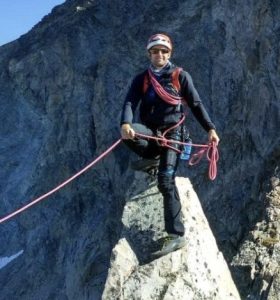
The Torreón was considered unclimbable until 14 May 1933, when Teógenes Díaz and Ricardo Rubio of the Club Alpino Peñalara reached the summit with a 20-metre hemp rope, rope-soled espadrilles and not a single piton. To silence the sceptics down in the valley, they left a zinc letterbox with a logbook on top. One month later, the second ascent placed what is considered the first piton ever used by Spanish climbers in Spain. The first woman summited in 1947 (Angelines Aguerralde), the first winter ascent came on New Year’s Day 1948, and by 1981 the legendary Adrados topo already catalogued some 210 routes.
Generations of Spanish climbers have learned their mountain craft on these needles ever since. Climbing here today means following, quite literally, in the footsteps of the pioneers.
Getting there and the Victory hut
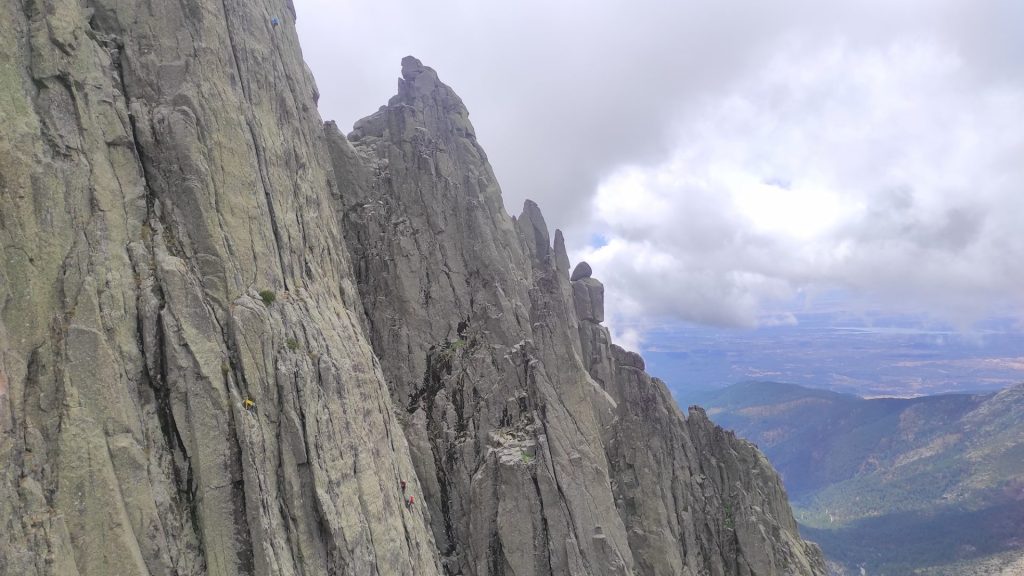
Los Galayos sits above Guisando (Ávila), a little over two hours’ drive west of Madrid via the A-5 and N-502 towards Arenas de San Pedro. From the Plataforma del Nogal del Barranco car park above the village (you will know you are there when you see the statue of a male ibex; spaces are scarce, so arrive early on weekends), the PR-AV 43 trail climbs the gorge for around 2.5 hours to the Refugio Victory. The routes start another 30 to 45 minutes above the hut, over blocks and gullies.
The Refugio Victory (1,970 m) is the logistical heart of the area and one of the most recognisable postcards in Spanish mountaineering, built in 1949 by the historic Club Peñalara and now run by the Grupo Gredos de Montaña. A detail most people miss: «Victory» is not the English word but the surname of Antonio Victory Rojas, a pioneer of Castilian alpinism who made the first ascent of the Gran Galayo in 1916. The hut is small and charming: a dining room with a fireplace downstairs, a sleeping loft upstairs, around 16 places. It is staffed through the summer season and keeps a winter room open the rest of the year. Check the opening calendar and book ahead, especially in spring and autumn.
This is the key to planning: Los Galayos is a full mountain outing, not a roadside crag. A weekend gives you the hike up and one or two needles without rushing; to really taste the place, sleep at the hut and give it two or three days. If you prefer to sleep low, Guisando, El Arenal and Arenas de San Pedro offer rural guesthouses, small hotels and camping a few minutes from the trailhead.
When to go
- Spring and autumn: probably the best seasons, with mild temperatures and perfect friction. Also the busiest, so book the hut.
- Summer: at over 2,000 metres the cirque stays far cooler than the valleys and is thoroughly enjoyable; play with aspects to dodge the midday sun and keep a sharp eye on afternoon storms, a serious hazard on these exposed needles.
- Winter and cold snaps: avoid the days after snowfall. The area becomes genuine high-mountain terrain, for experienced alpinists only.
Always check the forecast before walking in: Gredos weather changes fast, and a storm catching you halfway up a needle is no joke.
What to bring
- A full rack of cams (doubles in the common sizes) and a set of nuts.
- Quickdraws plus long slings for wandering pitches.
- Double ropes, both to cut rope drag and for the long abseil descents.
- Helmet (non-negotiable), approach shoes for the blocky walk-ins, belay/self-rescue material and a small first-aid kit.
- Water and food for a full mountain day. There is no topping up between the hut and the summit.
Ethics and access
Los Galayos has stayed a bastion of clean climbing, and keeping it that way is everyone’s job:
- No bolts. The local ethic is self-protection; adding expansion bolts is prohibited, and any new-routing plans should be discussed at the hut first.
- Go easy on the chalk, no fires, keep the noise down.
- You are inside the Sierra de Gredos Regional Park: pack out everything and watch for seasonal bird-nesting restrictions.
- Plan the descent. The Torreón only goes down by abseil; other needles mix abseils with downclimbing gullies worth knowing in advance.
- Judge your level honestly. Mountain terrain punishes mistakes, and turning around is always a valid summit.
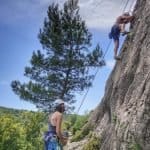
Beyond the climbing
Guisando keeps a lovely mountain-village feel, and the area offers natural pools like the Charco Verde for post-climb swims, the Gredos Regional Park visitor centre, and endless hiking up the gorges. For climbers who want more, the Circo de Gredos with the summit of Almanzor is a mountaineering paradise one valley away. And a piece of trivia to win dinners: the famous Toros de Guisando, the Celtiberian stone bulls where Isabella the Catholic was recognised as heir in 1468, are not actually in Guisando village but in neighbouring El Tiemblo.
Climb Los Galayos with a certified guide
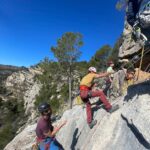
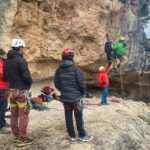
If you can climb grade V at your local crag but cracks, cams and abseil descents are not yet your world, Los Galayos with a certified local guide is one of the best mountain days Spain can offer. The guide picks the right needle for your level, handles the gear and the belays, and gets you safely off the summit: you climb the Torreón instead of worrying about it. It is also the sensible way to take your very first steps in trad climbing, on the granite where Spanish trad was born. Guides in the area run classic-climbing courses, guided ascents and multi-day programmes based at the Victory hut.
Tell us your level and dates, and climb a Galayos needle with a local guide
Useful links
- Climbing guides in Los Galayos (profiles in Spanish, several guides speak English)
- More climbing destinations in Spain