
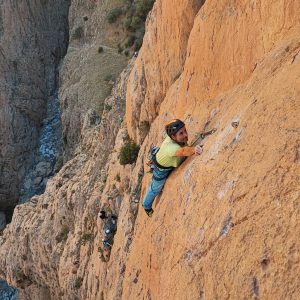
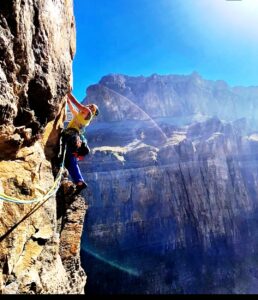
Chulilla is one of the world’s great sport-climbing meccas. In a canyon barely four kilometres long, on Spain’s Mediterranean side an hour from Valencia, the river Turia has carved orange limestone walls that today hold more than 1,400 routes, most of them vertical and endurance-focused, and that fill with climbers from all over the world in the depths of winter. This is the most complete guide to getting the most out of Chulilla: its sectors, the must-do routes at every grade, the best season, how to get there, what you pay and where to sleep.

Quick facts
- Where: Chulilla, on the banks of the river Turia, an hour from Valencia (Spain)
- Rock: orange limestone, in a canyon around four kilometres long (the Turia gorges)
- Style: sport, vertical and endurance; crimps, pockets, stalactites and tufas
- Number of routes: more than 1,400 across some 59 sectors (around 1,329 already catalogued in the databases)
- Grades: from 3 to 8c+, with a brutal density between 6c and 8a
- Route height: the average is over 30 metres; the canyon walls reach 160 metres
- Season: October to June; winter is the high season
- Good to know: climbers do not pay the eco-fee to enter the site (only hikers do)
If you ask about climbing in Valencia anywhere in Europe, the name that comes up is Chulilla. And for good reason: it is one of the few places where you can climb in a T-shirt in the sun while half the continent puts the rope away. That is why, between October and May, this village of around 700 inhabitants fills with vans carrying number plates from all over Europe, and its population multiplies by five at weekends. Climbers come from as far away as New Zealand and Tasmania.
This guide tells you everything you need: where to climb for your level, which routes you cannot miss, when to go, how to get there, what you will pay and where to sleep. And, along the way, the story that has turned this canyon into a top-tier destination, on a par with El Chorro or Siurana.
Why Chulilla is a climbing mecca
Three things explain it: volume, quality and season.
- Volume and concentration. More than 1,400 routes in a canyon you can walk in a few minutes. Approaches run from five to twenty minutes from the village or the car park. Few destinations offer so much rock so close at hand.
- A style of its own. Chulilla limestone is vertical or slightly overhanging, with long routes (the average is over 30 metres) that are very technical and, above all, about endurance. It is not a hard-bouldering venue: it is a place for hanging on, for crimps, pockets and those tufas and stalactites that make sectors like Oasis or Chorreras unmistakable.
- Season. Winter is the star season. Mild weather, dry rock and just enough sun in the gorge. When bad weather hits the rest of Europe, Chulilla is many climbers’ plan A.
The band from 7a to 8a is the jewel: this is where the highest density of world-class routes is concentrated. But there is everything, from grade 3 to start out to 8c+ projects. The guidebook’s breakdown sums it up well: around 310 routes from 3 to 6b, around 550 from 6b+ to 7b, and more than 300 from 7b+ upwards.
The sectors of Chulilla
One of the best things about Chulilla is that it has more than 50 sectors, spread along the canyon across five large zones:
- Chulilla Boca de la Voz, with 14 sectors, including many of the best known and most highly rated by climbers.
- Barranquillo-Falfiguera, with 12 sectors.
- Tabaira-Cherales, with 11 sectors.
- Pantano, with 8 sectors.
- Loriguilla, with 3 sectors.
The rock is limestone, excellent to climb on, and that explains the huge number of visiting climbers. These are some of the best-known sectors and what each offers:
- El Muro de las Lamentaciones: 21 routes over 30 metres, with grades between 6b and 7a+.
- La Pared de Enfrente: split into four zones (Los Directos, El Romallar, Tierra de Nadie and Sex Shop), with a total of 74 routes of very varied difficulty and a minimum of 6a.
- Odín: 8 routes, between 6a and 7a.
- Más Allá: 15 routes between 5a and 7b+, most of them at the harder end.
- Los Techos: 12 routes up to 35 metres and high difficulty, up to 8a+.
- Competición: 32 routes up to 33 metres; apart from one 5c, almost all hard, mostly above the seventh grade.
- La Ceguera: 26 routes between 18 and 35 metres, with grades from 5c to 8b.
- Los Perros: 24 routes, mostly short (6 to 12 metres, some 18), with grades from the fifth grade to 8b.
Approaches are comfortable: at most 20 minutes to the foot of the routes, and some sectors are barely a minute from the village. To pick sun or shade, in the depths of winter head for the sunny sectors, and in the shoulder seasons and summer look for the shade of the canyon: that variety of orientations is what lets you climb 365 days a year.

The must-do sectors
Above all others, there are three star sectors that every climber mentions: Oasis, Chorreras and the Muro de las Lamentaciones.
- Oasis (I and II) is Chulilla’s endurance classic: orange crimping limestone on a slightly overhanging wall and very long routes (you will need an 80-metre rope). It sits in the shade, with sun only from mid-afternoon, so it works even in summer.
- Chorreras, right next door, is pure spectacle: stalactites and tufas for athletic climbing on overhanging ground, like a natural climbing gym.
- El Muro de las Lamentaciones is an imposing vertical wall with overhanging sections: technical crimping and endurance climbing.
To round it out: Competición and Los Techos are the hard ground, from the seventh grade up; Fantasía and Cherales are the kingdoms of beginners, with plenty of fifth and sixth grade; La Peñeta is the best moderate sector (6b to 6c+) and catches the sun, ideal in winter; and the hardest sector of all is El Embalse, with routes up to 8c.
Contact the local professionals directly.
The classic routes of Chulilla
With more than a thousand routes, a short list is almost unfair, but these are some of the classics that get repeated the most. For the full list, Pedro Pons’s guidebook is the reference. In the lists below the route name is in bold; the length and the grade are not.
- Magnetorresistencia 37 m, 6b+, in Oasis: the go-to route to warm up and get a feel for the rock, long and sustained.
- Long Dong John 40 m, 6b+, in Chorreras: spectacular stalactite climbing, often rated one of the best of its grade in the world.
- Plan Z Dos 7a, in Oasis: crimp endurance from start to finish.
- Blue Agave 7a, in the Muro de las Lamentaciones area.
- Dale Duro, Negro 7b, in Sex Shop: a much-repeated technical dihedral.
- Sensación Azul 7b+, in Sex Shop.
Two more names any visitor will hear: Tequila Sunrise 38 m, 8a, the mega-classic and the most attainable line on the steep wall of El Balconcito; and Siempre se puede hacer menos 63 m, 8c (proposed 8c+), on the Pared Blanca, where Slovenian Klemen Bečan made one of the hardest on-sight ascents in history on 30 December 2014. The crag’s grade ceiling sits at 8c, in the El Embalse sector.
When to climb in Chulilla
Winter is the high season, and it is no accident: the limestone is dry, it is cool enough to grip and the gorge sun warms things just right. The good window runs from October to June, with October-November and March-May the best for temperature.
- Winter and shoulder seasons: the best time. You pick sun or shade depending on the sector and the hour.
- Summer: possible, but only in the shade and first or last thing. It is not its season, and many services in the village wind down.
- Crowding warning: Easter and the long weekends saturate the canyon (which shares its access with the hanging-bridges trail), and at Christmas there are plenty of international climbers. The most popular routes have holds polished by use. If you can, avoid those dates.
Getting there
Chulilla is around 60 kilometres from Valencia, between 45 minutes and an hour by car, via the CV-35 (the Ademuz motorway) and then the CV-395/CV-394. A car is the practical way to get there: public transport is very limited (the odd weekly bus from Valencia, no train) and not much use for climbing.
Access, fees and parking
Here is what almost no guide tells you, and is worth knowing before you go:
- Chulilla has no bird-nesting closures. You can climb all year.
- The canyon is a Municipal Natural Site («Los Calderones»), with an eco-fee to enter, but climbers are exempt (as are residents, over-65s and under-10s). That fee is paid by the hikers who walk the canyon, not by those going to climb.
- Parking: there is a fee at the car park by the entrance to the site (a few euros), and there is usually the option to park for free a little further away. At weekends and on public holidays there may be a capacity limit. As the municipal amounts change, it is worth checking the town council website before you go.
- Bolting new routes calls for caution: the canyon lies within the Turia Natural Park, so you must check first with the forest ranger and the local climbers.
Campervans and vans
The area changed at the end of 2025. There is a new service area («Punt Net») for waste emptying and drinking water (tokens at the village tobacconist), but you cannot stay overnight there; the campervan parking moves a few metres higher up, next to the CV-394. And remember: Valencian forestry rules do not allow wild camping or sleeping in a vehicle outside designated places. Check before you go and lean on apps like Park4Night, looking at the most recent reviews.
Where to stay
Chulilla lives off climbing, so there is accommodation right by the canyon: the well-known climbers’ refuge «El Altico», guesthouses, rural houses and apartments (a rough average of around 28 euros per person) and camping nearby. When the village fills up, support villages like Villar del Arzobispo or Sot de Chera (about 15 km away) are the alternative. In high season, book ahead.
What gear to bring
Chulilla punishes a short rope. Bear in mind:
- An 80-metre rope: many routes are over 30 metres and with a 70 you can come up short when lowering off. Always tie a knot in the end.
- 16 to 18 quickdraws: the routes are long, and some ask for more.
- A helmet: in a busy canyon there is a risk of rockfall and of stones knocked down by other climbers or by the hikers above.
The village, the canyon and rest-day plans
Chulilla is not only about climbing. It is a village with a spa tradition perched above the gorges, crowned by a castle of Moorish origin (10th century) that was once used as a prison for clergymen on the orders of San Juan de Ribera. Below, the Turia forms pools of turquoise water.
- The Ruta de los Pantaneros (hanging bridges). The village’s great walk, ideal for a rest day or for non-climbing companions: about 10 kilometres for the full loop (or around 4 to the second bridge), with two hanging bridges over the canyon. And the detail almost nobody tells you: this trail was not born as a tourist path, but as the route of the workers («pantaneros») who built the Loriguilla dam in the 1950s. The original bridges were swept away by a flood and not rebuilt until 2013.
- El Charco Azul, a natural pool of turquoise water whose name comes from the Arabic azud (the weir the Moors built here in the 12th century to irrigate the market gardens).
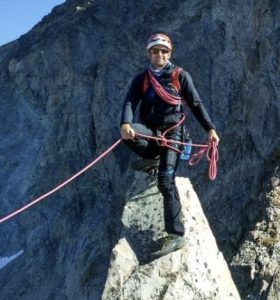
Multi-pitch and big walls: the other side of Chulilla
Chulilla is famous for its single-pitch sport climbing, but the canyon has also produced great horizontal adventures:
- Las Reglas del Juego (1996): a traverse of some 550 metres and 20 pitches along the Pared de Enfrente, almost without bolts, opened by Vicente Cervera «El Presi» and Jesús García «El Pato» in the most purist big-wall style, never coming down to the ground. When David Palmada «Pelut» repeated it in 2018, he found a metal tin hidden on the wall with the first ascensionists’ signatures and the notes of previous repeaters.
- Chulilla Experience (2022): a horizontal big wall of more than 1,000 metres along the Turia canyon, opened by Pelut and Alex Pastor over four years and three campaigns, sleeping in portaledges hung from the wall.
A bit of history: the village that bet on climbing
Behind Chulilla is Pedro Pons, one of its main drivers and route-equippers. A detail almost nobody knows: Pons was Bouldering World Cup champion in the year 2000, with wins in Millau, Munich and Grenoble, where he sealed the title by topping the last boulder in the closing seconds. The man who placed many of the canyon’s bolts won a World Cup.
And the most remarkable part: the village paid for the routes. The regional tourism department put in 30,000 euros between 2009 and 2010 to open 48 routes on the Muro de Enfrente, and in 2011 more than 268,000 euros of EU FEDER funds were approved for infrastructure, including rebuilding the Pantaneros path. Rarely do you see so clearly how a sport can revive a village.
Chulilla has also brushed with disaster: the great fire of 2012 razed much of the region, but the wind spared the Turia canyon and only affected around 50 of the roughly 700 routes there were at the time, almost all already out of use.
First time in Chulilla? Go with a guide
Chulilla is a destination of long routes, big crowds and a high-level atmosphere. If you are starting out on rock, or if you want to make the most of the trip without wasting time hunting for sectors in condition, going with a certified guide is the safest and quickest way to enjoy it. They take you to the right sector for your level and the day, and teach you how to move on routes of more than 30 metres.
Frequently asked questions
How many climbing routes are there in Chulilla?
More than 1,400, spread across some 59 sectors (around 1,329 already catalogued in the databases). They range from 3 to 8c+, with a huge density between 6c and 8a.
When is the best time to climb in Chulilla?
Winter is the high season; the good window runs from October to June, and the best temperatures come in October-November and March-May. In summer you climb only in the shade and first or last thing.
Do you have to pay to climb in Chulilla?
No. The canyon is a Municipal Natural Site with an eco-fee to enter, but climbers are exempt; only hikers pay it. Parking does have a small fee (with a free option a little further away).
Can you sleep in a van or campervan?
Not just anywhere. Valencian forestry rules do not allow wild camping or overnighting outside designated places, and the service area changed at the end of 2025. Check before you go.
What level do you need to climb in Chulilla?
There are routes from grade 3, but Chulilla shines from 6c to 8a. To start out, the Fantasía and Cherales sectors are the most recommendable. If it is your first time on rock, go with a guide.
What rope do you need for Chulilla?
An 80-metre rope: many routes are over 30 metres and with a 70 you can come up short when lowering off. Bring 16 to 18 quickdraws and a helmet too.
Climbing Chulilla with a certified guide
Chulilla is worth many trips and a whole progression. If you want to make the most of it (choosing the right sector for the month, sending your project or taking your first steps on rock safely), on this page you can get in touch directly with certified guides who work in Chulilla and across the whole Valencian Community, and see their courses and activities.
Tell us your plan and climb Chulilla with a certified local guide
Useful links
- Climbing guides in Chulilla (profiles in Spanish, many guides speak English)
- Climbing in Valencia, Spain: all the areas in the province
- More climbing destinations in Spain