Siurana Climbing Guide 2026: Sectors, Routes, Seasons and How to Plan Your Trip
Climb and learn with a qualified local guide Tell us your plan →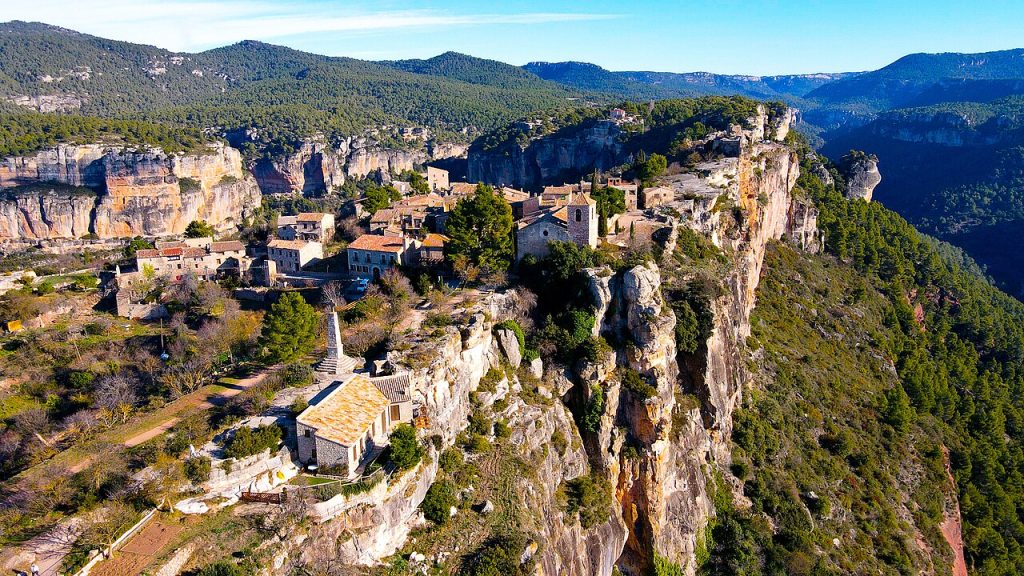
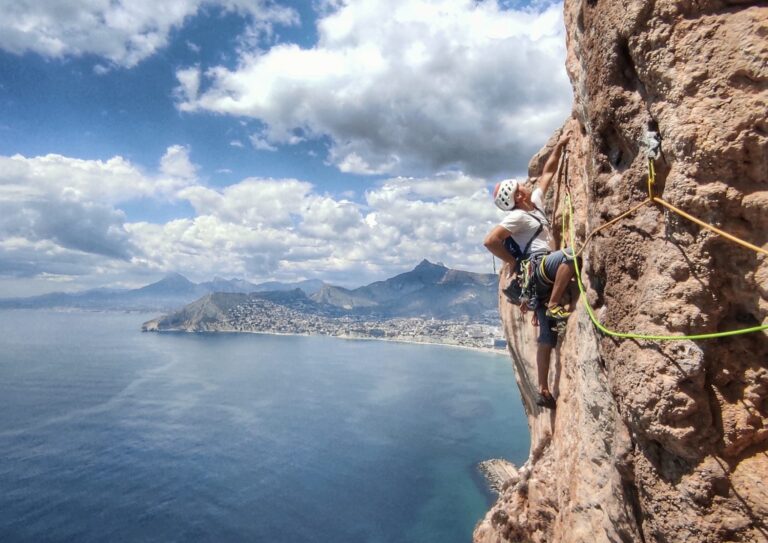
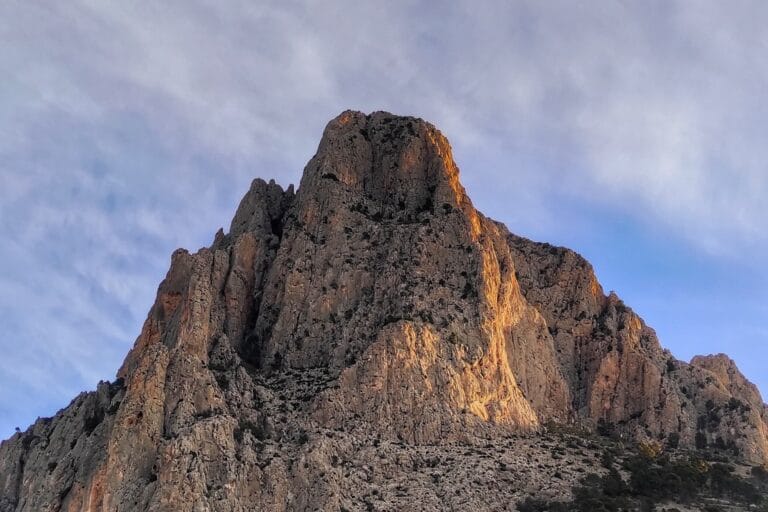
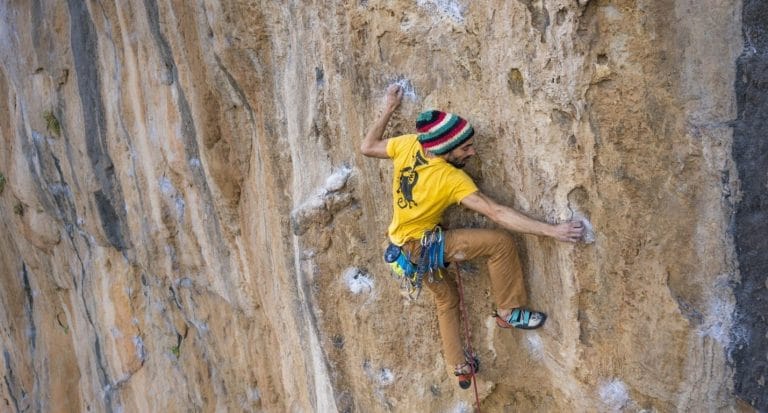
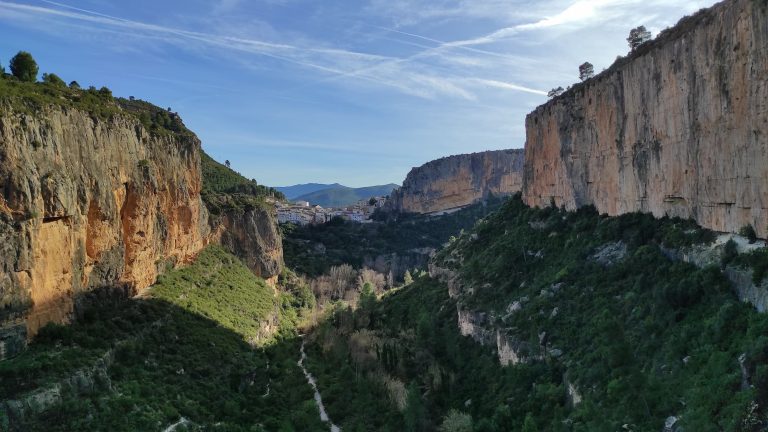
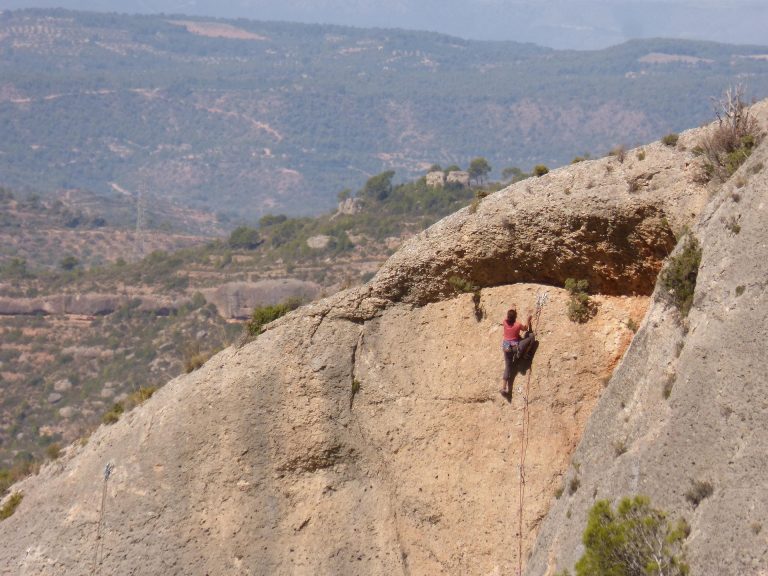
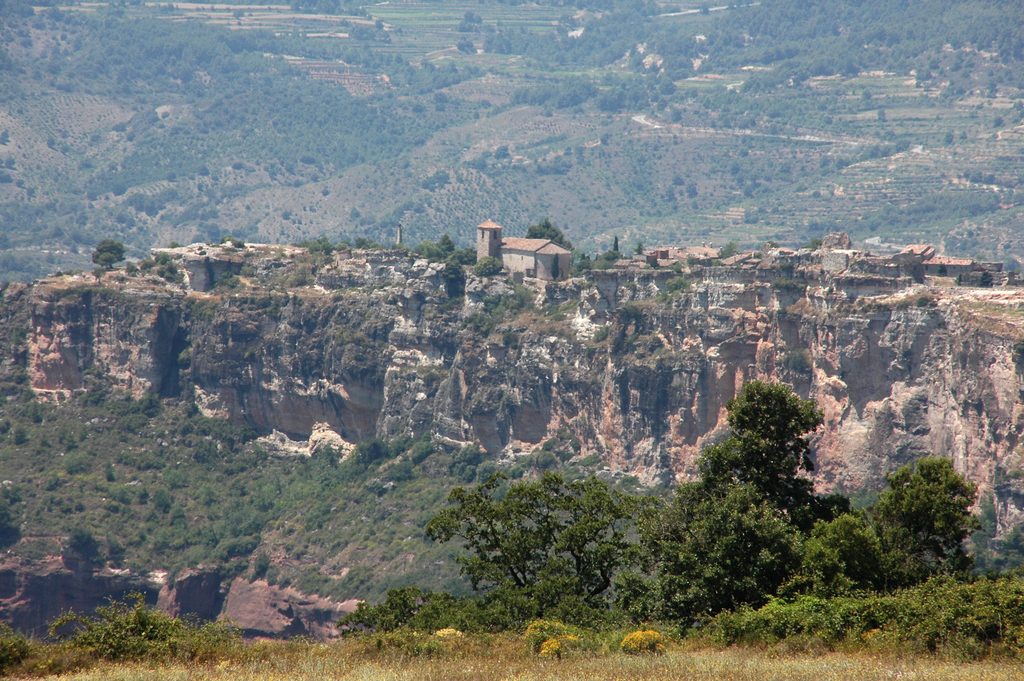
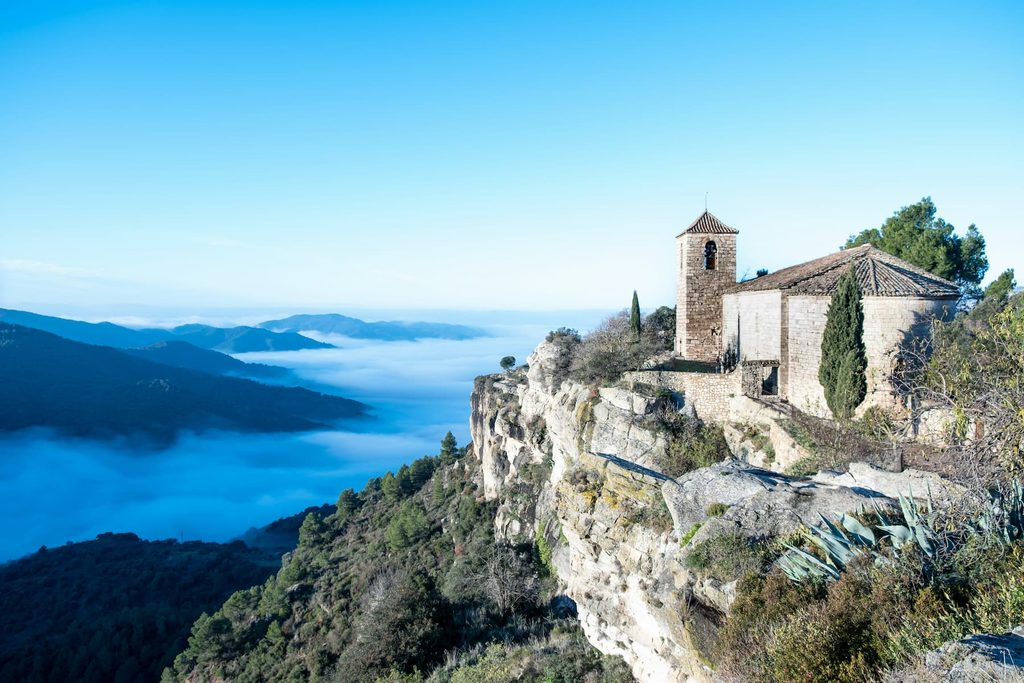
Siurana is a medieval village of a few dozen people perched at 737 m on the edge of a limestone cliff in the Priorat, in Catalonia, about two hours from Barcelona. It is also the most famous limestone sport-climbing area in Catalonia. Around it, close to 2,000 routes from grade 3 to 9b+ are spread across the walls of a valley that drops to a turquoise reservoir. La Rambla, Estado Crítico and Sleeping Lion were climbed here, but the real treasure for most visitors is the hundreds of long 6s and 7s on grey and orange crimps that give nothing away. Siurana is fascinating and demanding: easy routes are few, and the grades have a reputation for being stiff.
This guide is written for climbers from the UK, the US and the rest of Europe who have never been to Siurana or to this corner of Spain. It covers what to expect from the rock, which sectors suit your grade and the season, the local rules and car parks, how to get there, where to sleep, what to do on rest days and when it rains, and how to plan three days, a week or two weeks.
Contents34 sections
- Climb here with a qualified guide
- Siurana at a glance
- Is Siurana right for you?
- Before you go: what is new in 2026
- The rock and the climbing style
- French grades, in plain English
- When to go, month by month
- Sun and shade: choosing a sector
- How Siurana is laid out
- The valley: Esperó Primavera, El Pati and L’Olla
- Siuranella and L’Herbolari
- Shady sectors: L’Aparador, Can Codolar, Reserva India and Négociée
- The village sectors
- Grau dels Masets and Corral Nou
- All the other sectors, with grades
- Which sectors for your grade
- Best routes by grade
- The legendary hard routes: 8c+ and up
- A little history
- Getting to Siurana
- Parking and access
- Rules, closures and the environment
- Where to stay
- Food, supplies and shops
- Practical information for visitors
- Gear, safety and etiquette
- Rest days and things to do
- When it rains
- Other crags nearby for a longer trip
- Itineraries for three days, one week and two weeks
- What to pack, by season
- Guidebooks and information
- Plan your trip with qualified guides
- Frequently asked questions about climbing in Siurana
Climb here with a qualified guide
If you are new to Spanish limestone, or want to make the most of a short trip without spending half a day looking for the right wall, a qualified mountain guide is a fast way in. A guide knows which walls will be in the sun or the shade on the day you go, can take you to the right sector for your grade, help you manage the long routes and the lower-offs, and teach you how to handle the exposed approaches safely. Qualified mountain guides who work in Siurana and the Tarragona area are available through Destino Climbing, for a single day or a multi-day course.
Siurana at a glance
- Where: Siurana, a hamlet of the municipality of Cornudella de Montsant, Priorat county, province of Tarragona, Catalonia (northeast Spain)
- Rock: Grey and orange limestone: crimps, pockets and sharp edges; tufas are rare and almost all in one sector, L’Olla
- Routes: Close to 2,000, in about 75 areas or sectors
- Grades: 3 to 9b+, with the great majority between 6a and 8c+ (above all in the 7s)
- Style: Single-pitch sport climbing, mostly vertical or slightly overhanging, technical and fingery; some routes are 35 to 45 m long
- Altitude: The village sits at 737 m; the sectors are spread across the valley and below the village
- Best season: September to May, choosing your sector by the sun; in summer, shady sectors only
- Parking: €3 per vehicle per day in the regulated car parks; no driving inside the village
- Rope: 70 m recommended
- Getting around: You need a car: buses are few and there is no regular bus to the village itself
- Where to stay: Campsite with bungalows, a hotel, a club hut and holiday rentals in Siurana; more houses and apartments in Cornudella de Montsant, about 8 km away
- Icons: El Pati, home of the hardest routes, and La Rambla (9a+)
- Emergencies: 112
Is Siurana right for you?
Siurana is not like the modern limestone crags on the coast, nor like Margalef, its conglomerate neighbour about 40 km away by road. The rock is hard, compact and polished by decades of traffic, the routes are long for sport routes, and the grades are old school: if you come from more generous crags, you will notice it on your first warm-up. In return you get spectacular scenery, a village with a ruined castle above a reservoir, and more than forty years of climbing history.
It is a great fit if you climb between 6b and 8a and want endless choice for a week or more; enjoy long, vertical, technical routes on small holds; want to climb in the sun in winter; or dream of seeing (or trying) some of the most famous hard routes in the world.
Think twice if you are a beginner looking for a week of easy routes (routes at 5c and below are few); want mostly steep tufas and overhangs; plan to come without a car; or want nightlife and a beach next to the crag (the coast is about an hour away).
Before you go: what is new in 2026
- Parking is paid all year: €3 per vehicle per day, and you cannot sleep in your vehicle in the car parks (details below).
- Access controls on the busiest days. The council has restricted cars on the access road once the car parks are full, typically at Easter, on 15 August and over the early December long weekend; the festival weekend is also very busy.
- The village is protected. Siurana has been a listed Cultural Asset of National Interest since 1995, and the council is drafting a special protection plan that will set, among other things, where people can park. Expect changes.
- A future natural park. A Natural Park of the Prades Mountains, Poblet and the Serra de la Llena has been proposed. Its draft decree went through public consultation but had not been approved when this guide was last reviewed. The draft covers part of the municipality of Cornudella de Montsant, and whether and how it will affect Siurana is not settled, so for now the signs at each sector are what count.
- Siurana Climbing Festival. Held in Cornudella de Montsant, usually in November (the 2023 edition ran from 10 to 12 November). Check this year’s dates on the festival website and book accommodation early.
The rock and the climbing style
The rock
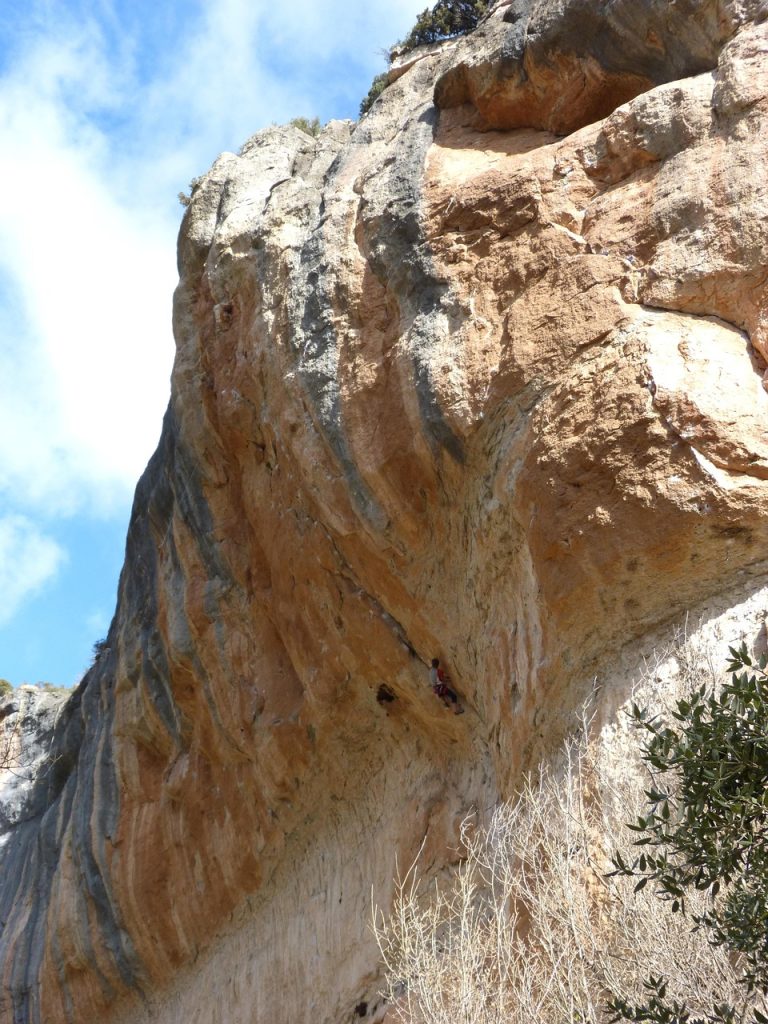
Siurana is limestone. Towards the top of the cliffs the rock is layered and sometimes broken; lower down it is more monolithic and rough, and that is where the best climbing is. Expect crimps, water-carved pockets and sharp edges. Almost all the walls are vertical or slightly overhanging, and the properly steep ones tend to be hard. The tufas that give pumpy, three-dimensional climbing elsewhere in Spain are almost all in a single sector, L’Olla.
Old-school style
Siurana became a sport-climbing crag about forty years ago, and it shows: technical, fingery routes, cruxes that ask you to read the sequence, and on some routes spaced bolts that do not suit a climber who freezes. The result is honest, high-quality climbing and a reputation for hard grades, so plan to drop a grade or so for the first few days. Some popular routes are polished.
How many routes, and at what grades
The latest printed guidebook (2023) lists 2,014 routes in 75 areas, from 3 to 9b+; counts vary with how sectors and projects are counted. Most routes are between 6a and 8c+, and the 7s are the most common grade. Routes at 5c or below are few and concentrated in a handful of sectors. Above 8c+ there are only a few lines, almost all at El Pati, La Capella and L’Olla. In short: Siurana is a superb destination if you climb 6b to 8a, a bit thin if you are just starting, and a mecca if you are chasing grade 9.
French grades, in plain English
Siurana uses French sport grades; on the easiest routes you may also see Roman numerals (IV, V, V+) or «5» and «5+». This table is approximate: no two systems line up exactly, especially in the lower grades, and UK technical grades are designed for trad, so treat that column as a rough reference.
| French | YDS (US) | UIAA | UK tech (rough) |
|---|---|---|---|
| 4a | 5.4 | IV | |
| 4b | 5.5 | IV+ to V- | 4a |
| 4c | 5.6 | V | 4b |
| 5a | 5.7 | V+ | 4c |
| 5b | 5.8 | VI- | |
| 5c | 5.9 | VI | 5a |
| 6a | 5.10a | VI+ | |
| 6a+ | 5.10b | VII- | 5b |
| 6b | 5.10c | VII | |
| 6b+ | 5.10d | VII+ | 5c |
| 6c and 6c+ | 5.11a to 5.11c | VIII- | 6a |
| 7a | 5.11d | VIII | |
| 7a+ | 5.12a | VIII+ | |
| 7b | 5.12b | 6b | |
| 7b+ | 5.12c | IX- | |
| 7c | 5.12d | IX | |
| 7c+ | 5.13a | IX+ | 6c |
| 8a | 5.13b | X- | |
| 8a+ | 5.13c | X- | 7a |
| 8b | 5.13d | X | |
| 8b+ | 5.14a | ||
| 8c | 5.14b | 7b | |
| 8c+ | 5.14c | ||
| 9a | 5.14d | ||
| 9a+ | 5.15a | ||
| 9b | 5.15b | ||
| 9b+ | 5.15c |
When this guide talks about «the 6s» or «the 7s», it means the whole family, from 6a to 6c+ or from 7a to 7c+.
When to go, month by month
The good season runs from September to May, but what decides your day is the sector, not the month. The rule is simple: in winter, climb in the sun; in summer, climb in the shade.
The figures below are the official 1981-2010 averages of the Spanish weather agency (AEMET) for Reus airport, at 71 m. Siurana, at 737 m, is noticeably colder: as a rule of thumb, count on 3 to 4°C (5 to 7°F) less. In midwinter that means highs of roughly 10 to 12°C (50 to 54°F) and lows around freezing; in July and August, air temperatures of about 25 to 26°C (77 to 79°F), with the sunny walls much hotter.
| Month | Avg. high at Reus | Avg. low at Reus | Rain (mm) | Rainy days | Sunshine (hours) | In Siurana |
|---|---|---|---|---|---|---|
| January | 14.1°C (57°F) | 3.9°C (39°F) | 29 | 4 | 157 | Cold, crisp and often excellent in the sun; sunny south-facing sectors only |
| February | 14.9°C (59°F) | 4.5°C (40°F) | 28 | 3.5 | 162 | As January, with longer days |
| March | 17.1°C (63°F) | 6.6°C (44°F) | 28 | 3.8 | 197 | Spring conditions: a wide choice of sectors, sun or shade by the time of day |
| April | 19.0°C (66°F) | 8.6°C (47°F) | 37 | 5 | 222 | Very good; Easter is one of the busiest times of the year |
| May | 22.2°C (72°F) | 12.1°C (54°F) | 54 | 5.4 | 251 | Warming up; mix sunny mornings with shady afternoons |
| June | 26.3°C (79°F) | 16.1°C (61°F) | 25 | 3.1 | 274 | Hot; shady sectors, early or late |
| July | 29.3°C (85°F) | 19.1°C (66°F) | 15 | 2 | 306 | Driest and sunniest month; not a climbing season except in deep shade at dawn |
| August | 29.4°C (85°F) | 19.7°C (67°F) | 42 | 3.6 | 265 | As July; the village festival on 15 August makes it very busy |
| September | 26.3°C (79°F) | 16.6°C (62°F) | 77 | 5.1 | 209 | The season restarts; one of the two wettest months |
| October | 22.3°C (72°F) | 12.7°C (55°F) | 75 | 6 | 182 | Prime time on most walls, but expect some rainy days |
| November | 17.5°C (64°F) | 7.6°C (46°F) | 53 | 4.4 | 157 | Excellent in the sun; festival weekend in Cornudella |
| December | 14.6°C (58°F) | 4.7°C (40°F) | 36 | 4.1 | 145 | Short, cold days; sunny sectors; the early December long weekend is very busy |
«Rainy days» are days with at least 1 mm of rain. Reus averages about six days of frost in January, and it is colder up in the hills.
Busiest times: Easter, 15 August, the early December long weekend and the festival weekend; climb on weekdays if you can. Wind: in winter the northwest wind is cold; on windy days, pick the sheltered sectors from the table below.
Sun and shade: choosing a sector
| Conditions | Best sectors | Why |
|---|---|---|
| Winter (December to February) | Siuranella Sud and Siuranella Centre, Salt de la Reina Mora, Can Piqui Pugui, Can Melafots, Ca la Isabel, Esperó Primavera | South-facing, with sun almost all day |
| Winter, windy or very cold | L’Olla, Can Piqui Pugui, Grau dels Masets, El Ditot | More sheltered |
| Spring and autumn (March to May, September to November) | El Pati, Siuranella Est, Esperó Primavera, Grau dels Masets, Can Marges | A mix of aspects: sun or shade depending on the time of day |
| Summer (June to August) | L’Aparador, Reserva India, Can Codolar and L’Olla in the morning, Négociée | Shade; even so, midsummer is the least recommended time |
| Morning shade, afternoon sun | El Pati, Can Codolar, Esperó Primavera | Go early on warm days; Siuranella Est for afternoon shade |
How Siurana is laid out
The sectors fall into three geographical blocks. Understanding them will save you time and the odd pointless walk.
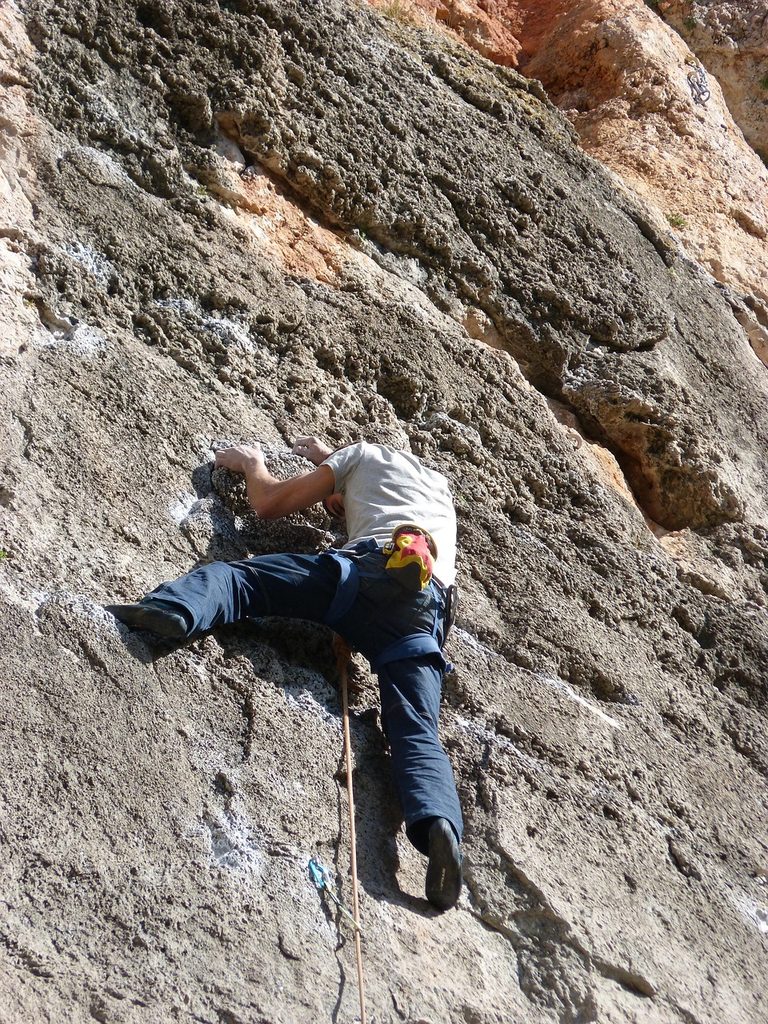
| Area | Main sectors | Parking and approach |
|---|---|---|
| The valley (sometimes called Fontscaldes) | L’Herbolari, Esperó Primavera, El Cargol, El Pati, L’Olla, L’Aparador, Can Codolar, Ca l’Onassis, Siuranella (Sud, Centre and Est), Négociée, La Capella | Along the access road from Cornudella. Park in the laybys a few kilometres below the village and walk 2 to 15 minutes to each wall |
| The village | Can Melafots, Ca la Isabel, La Trona, Can Marges, Can Paràsit, Can Gans Dionís, Can Piqui Pugui, Can Toni Gros, Salt de la Reina Mora and others | Park in the village car parks by the castle and follow the paths down from the village |
| Grau dels Masets and Corral Nou | Grau dels Masets (Esquerra, Camí and Baix), El Corral Nou, El Ditot and neighbouring sectors | Below the village, near the campsite, by a track that leaves the access road. Pleasant routes in the 6s |
Allow 2 to 15 minutes from the right parking spot, a little more for Grau dels Masets and Siuranella. Many approaches include downclimbs, fixed ropes, iron rungs or exposed ledges, unsuitable for small children. And do not park just anywhere along the road: laybys are limited, and the guidebook marks which one to use for each sector.
The valley: Esperó Primavera, El Pati and L’Olla
| Sector | Sun | Routes | Grades | Approach and notes |
|---|---|---|---|---|
| Esperó Primavera | Shade until mid-morning, then sun | 53 | 5+ to 8b (mostly 6s and 7s) | Routes up to 35 m; good in autumn, winter and spring |
| El Pati | Shade in the morning, sun afterwards | 47 | 6b to 9b (mostly 8s) | Long overhanging wall, routes of about 40 m |
| L’Olla | Shade in the morning and late afternoon | 60 | 6b to 9a (mostly 7s and 8s) | Very exposed ledge on the approach, not for children; good on cold, windy days |
Esperó Primavera
One of the valley’s best sectors for moderate grades: half of its routes are 6s, on slabs and technical vertical walls, with many local classics. The route that gives the sector its name, Esperó Primavera (35 m, 6a; two pitches if you do not have a 70 m rope), is one of the best of its grade in Siurana. Next to it: Horny Attack (6a+), Primavera Sound (6b), Directa al Record (6c) and Mandragora (7b/7b+), one of the sector’s classics. Opposite the main wall, the Belbedere de l’Esperó Primavera is an island of rock with very easy routes (the easiest, Panxeta, is around grade 3), one of the few places in Siurana for a very first route.
El Pati
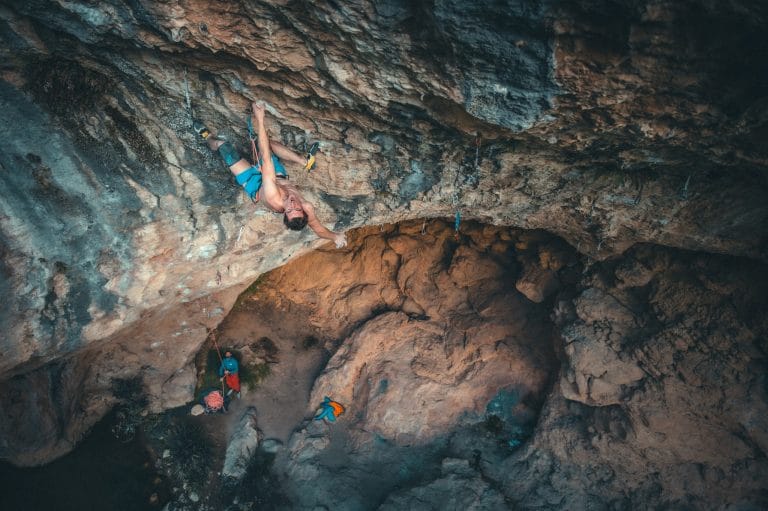
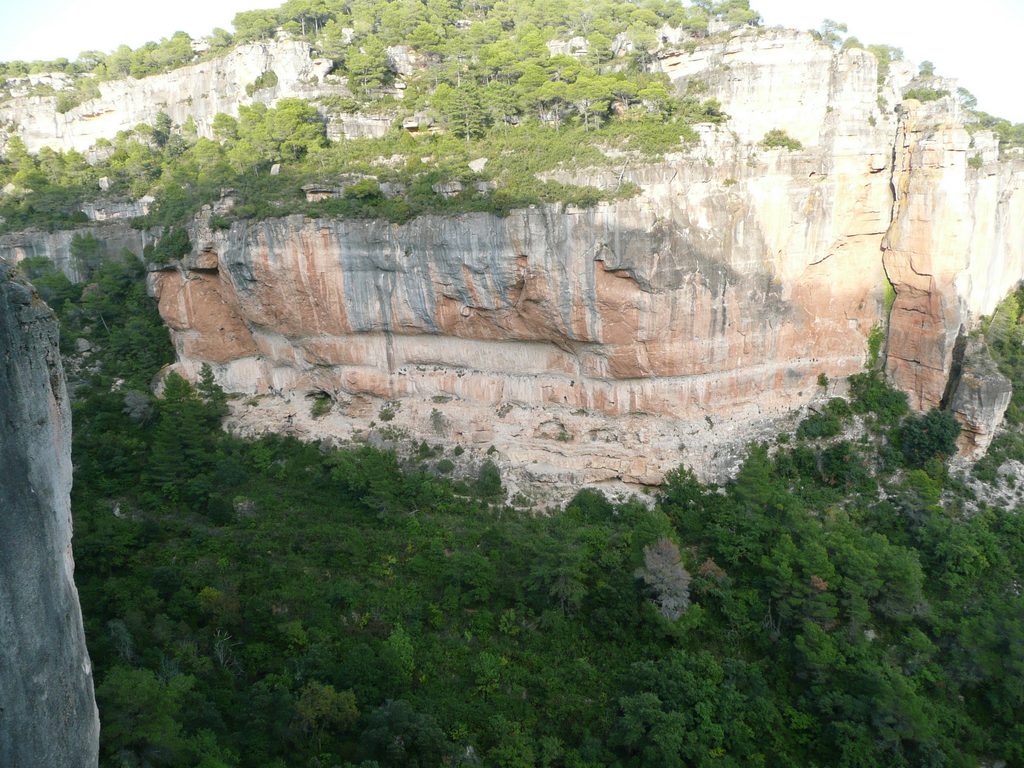
The sector with the hardest routes in Siurana and one of the most famous crags in Spain: a long, overhanging wall where routes of about 40 m demand stamina and a cool head. It is home to La Rambla (9a+), Estado Crítico (9a), Golpe de Estado (9b) and Sleeping Lion (proposed 9b+, now considered 9b). For the 7s and 8s there are many quality routes, such as Kalea Borroka (about 40 m, 8b+), one of the most beautiful lines in Siurana; for the 6s and lower 7s, a small handful on the right: Viagraman (6c+/7a) and ¡Ay Mamita! (7a). Combine it with Siuranella Est, which gets shade in the afternoon.
L’Olla
An overhanging amphitheatre, the «temple of power» of Siurana: short, pumpy routes on pockets, and the only famous tufas in the area. The 8s dominate, with La Cara Que No Miente (8a+), a classic that already appeared in climbing films in the 1990s, plus a few 6c routes at the far right-hand end.
Siuranella and L’Herbolari
Siuranella is three sectors of long walls, with routes of 22 to 30 m (some of them multi-pitch) and lots of 7s.
| Sector | Sun | Routes | Grades | Approach and notes |
|---|---|---|---|---|
| Siuranella Sud | The sunniest wall in the valley | 31 | 4a to 8c+ (mostly 7s and 8s) | Fixed-rope section on the approach; ideal in winter. Hardest route: La Corriola (8c+) |
| Siuranella Centre | South-facing | 66 | 6a to 8b (mostly 7s) | The biggest; climbable in midwinter if there is no wind; not for children. Filiprim (6a+), La Siuranella (6b, three pitches), Colze de Nena (7a+) |
| Siuranella Est | Shade in the afternoon | 58 | 6b to 8b (mostly 6s and 7s) | Narrow base, reached by iron rungs and fixed ropes; not for children. L’Escamarla (7c+), Ramadan (8a+/8b) |
| L’Herbolari | 46 | 5c to 8a (mostly 6s) | The first sector you see on the way up from Cornudella |
If you are uneasy on approaches with iron rungs or fixed ropes, check each access in the guidebook first. L’Herbolari is not very steep and has many moderate routes, mostly from 5c to 7a, such as Farigola (6a) and Cojón Prieto (7a): a good choice if you are making the jump from modern crags to Siurana’s long routes.
Shady sectors: L’Aparador, Can Codolar, Reserva India and Négociée
If you come in late spring, in a warm autumn or in summer, these are your sectors.
| Sector | Sun | Routes | Grades | Approach and notes |
|---|---|---|---|---|
| L’Aparador | The big shady sector | 39 | 5c to 8c (mostly 7s) | Less than two minutes from the main Esperó Primavera parking area; long routes of grey, almost vertical rock. Les dos Cosines (6a), Sorry Not Clean (6c), Rauxa (7a+, 7b with the second pitch), Llarguada (7b+) |
| Can Codolar | Shade in the morning, sun in the afternoon | 21 | 6b to 8a+ (mostly 7s) | Some fixed ropes on the approach; long routes |
| Reserva India | Shade all day | 42 | 5+ to 8b+ (mostly 6s and 7s) | Reached from the valley or from the village: check the access in the topo |
| Négociée | Northeast-facing | 32 | 6b to 8c+ (mostly 7s and 8s) | Access by a chimney and a narrow ledge; for climbers of 7b+ and above who want shade |
The village sectors
| Sector | Sun | Routes | Grades | Approach and notes |
|---|---|---|---|---|
| Can Melafots | South-facing; sun from first light until shortly before sunset | 52 | 5 to 8a+ (mostly 6s and 7s) | Less than a minute from the castle car parks |
| Ca la Isabel | Sunny | 26 | 6c+ to 7c (mostly 7s) | Close to Can Melafots; can feel hot even in the cold months |
| Can Paràsit | 26 | 4 to 7a+ (mostly 6s and 7s) | Good for beginners and children | |
| Can Marges de Baix | 18 | 4+ to 6c+ (mostly 5s and 6s) | Short routes of 15 to 20 m; the lowest grades in the village | |
| Can Marges de Dalt | 23 | 5 to 7c (mostly 6s) | The best slab for progressing; signposted nesting closure at the far right | |
| Can Gans Dionís | No direct sun at midday | 41 | 4 to 7c+ (mostly 6s) | Technical slabs; exposed approach with downclimbs and a ledge; not for children |
| Can Toni Gros | 28 | 6a to 7c+ (mostly 6s and 7s) | Just below the car park | |
| Can Piqui Pugui | Almost south-facing, sheltered from the northwest | 54 | 6b+ to 8c+ (mostly 7s and 8s) | Paths with downclimbs and scrub; bring a stick clip |
| Salt de la Reina Mora | Big sunny wall | 79 | 5 to 8b (mostly 7s) | Routes up to 35 m; the path is hard to find |
Can Melafots is the most convenient sector in Siurana. Its yellow rock is solid and kinder to the fingers than average, and it is perfect for warming up and for the cold months: try Trigonometria (6a+/6b), Viernes 13 (6b) or Gat Reggae (6c). Ca la Isabel, very close, has the same rock and is another good winter sector.
Can Marges and Can Paràsit are the best of Siurana for beginners and children. Can Paràsit starts with five routes from 4b to 5c on easy slabs, unusual here, then moves into the 6s, with Ateva (6a+) and Rasputín (6a+) as good first 6s. Can Marges de Baix has short routes on good rock and the lowest grades in the village: Corona Ciao (5a), Monolit Groc (5c), Extremoduro (6c). Can Marges de Dalt is grey, compact and pocketed: Flexta (5c), Escuela de Calor (6a) and Spit de Boira (6a+) are excellent warm-ups. At its far right-hand end there has been a nesting closure: if you see the sign, climb only to its left.
Can Piqui Pugui is a historic sector: a gently overhanging wall that ends in a bulge, with deep pockets, lots of 7s and 8s and few low grades. It is home to L’Odi Social (8c+), Mr. Cheki (8b+) and Gamba Gamba (7b). Sheltered from the northwest wind, it works in winter. Many routes start from ledges or have a high first bolt, hence the stick clip.
Salt de la Reina Mora is the big winter sector of the village, with Parvulitos (6b+), Perigeo (7a) and Minimal Techno (8a). Bring a 70 m rope. The path is hard to find because the terrain looks like a cliff edge: check the access in the topo.
Grau dels Masets and Corral Nou
Grau dels Masets is Siurana’s middle-grade area, and the one local climbers recommend most for 6a to 6c. It is split into Esquerra, Camí and Baix, with more than 120 routes on slabs and vertical walls up to about 20 m. Baix is the best and the hardest; Esquerra and Camí are friendlier, from 5c to 6b+, with routes such as L’Escola (5c) and Primera (6a). The access track crosses goat pasture, so close the gates. Nearby, El Ditot and El Corral Nou are much quieter. El Ditot has good 6s, such as Els Fenics (6a) and Guru (6b+), an arête and one of the best in the sector; El Corral Nou is more about the 7s.
All the other sectors, with grades
Beyond the sectors above, Siurana has dozens of smaller or quieter walls. These tables list them by area, with the number of routes, the grade range and, in brackets, the most common grades. The area totals include the main sectors described above. Route counts vary a little from one count to the next, and grades are approximate.
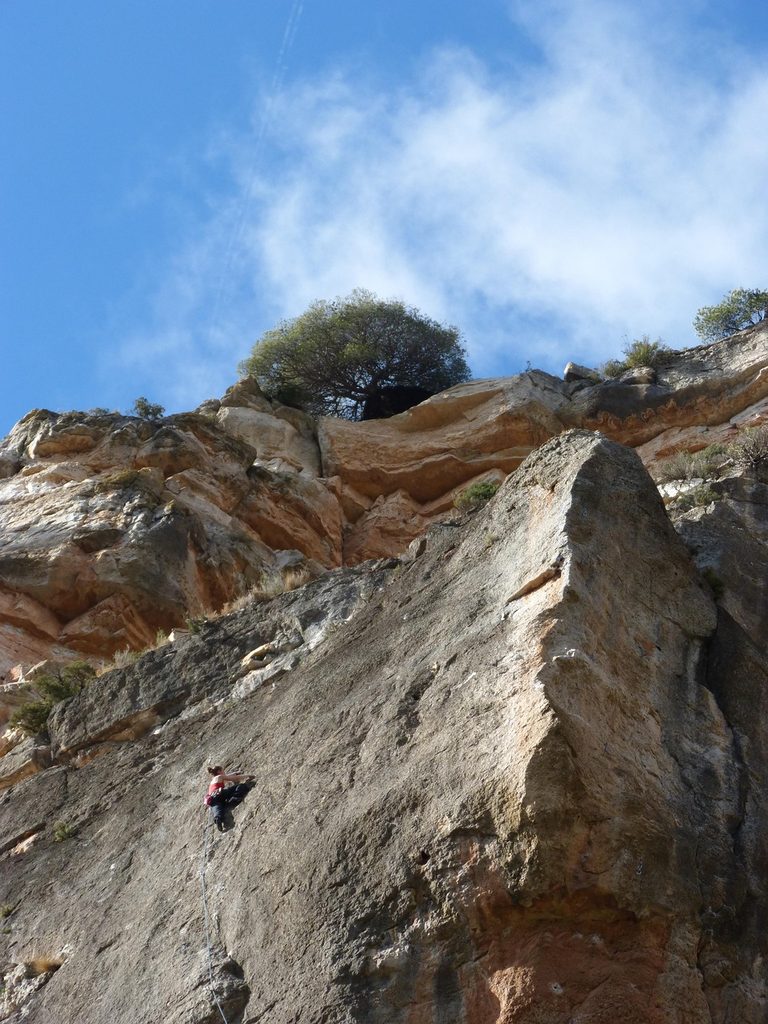
The Fontscaldes valley (603 routes)
| Sector | Routes | Grades |
|---|---|---|
| El Cargol | 22 | 5+ to 8a+ (mostly 6s and 7s) |
| Ca l’Onassis | 76 | 5 to 8b+ (mostly 7s) |
| El Solàrium | 17 | 5c to 8b+ (mostly 7s) |
| La Capella | 27 | 7a to 9b+ (mostly 8s) |
| Fontscaldes | 8 | 7c+ to 8c (mostly 8s) |
The village (476 routes)
| Sector | Routes | Grades |
|---|---|---|
| La Trona | 26 | 5+ to 7c+ (mostly 6s and 7s) |
| Ca l’Orro (Calorro) | 47 | 4c to 7b (mostly 6s) |
| Can Famal | 20 | 6a+ to 8b+ (mostly 6s and 7s) |
| La Planxa | 10 | 6b to 8a (mostly 7s) |
| Can Weekend | 12 | 4 to 6b (mostly 5s) |
| Can Rebotós | 4 | 5+ to 7b (mostly 7s) |
| Ca la Boja | 10 | 7b to 8a+ (mostly 7s and 8s) |
Corral Nou, El Ditot and the sectors along the Grau dels Masets track (339 routes)
| Sector | Routes | Grades |
|---|---|---|
| El Ditot | 28 | 5 to 7c+ (mostly 6s and 7s) |
| El Corral Nou | 26 | 6a to 8a+ (mostly 7s) |
| Corral Nou Camí | 12 | 4c to 7a+ (mostly 5s and 6s) |
| El Corralet | 14 | 6a to 7a (mostly 6s) |
| Ca l’Acorralat | 17 | 6a+ to 7c (mostly 6s and 7s) |
| Can Somera | 36 | 6a+ to 8c (mostly 7s) |
| Can Maquis | 15 | 6a to 7a (mostly 6s) |
| Operación Truño | 12 | 4b to 8a+ (mostly 6s) |
| Can Guiri | 30 | 6b to 8c (mostly 6s and 7s) |
| Totxo Abu Graib | 4 | 6b to 7c+ (mostly 7s) |
| Franja del Z | 15 | 6b+ to 8a+ (mostly 6s and 7s) |
| Grau dels Masets (Esquerra, Camí and Baix) | 130 | 4 to 8c (mostly 6s and 7s) |
Smaller sectors and longer approaches (373 routes, including Reserva India)
The printed guidebook groups these sectors by area. Some have very few routes, long approaches or temporary closures, so check each one before you go.
| Sector | Routes | Grades |
|---|---|---|
| La Covassa | 19 | 5c to 8c+ (mostly 7s) |
| El Recingle del Tití | 32 | 5 to 8b (mostly 7s and 8s) |
| El Dau | 2 | 6c to 7a+ (6s and 7s) |
| Sectors del Kik | 16 | 6b to 7c+ (mostly 6s and 7s) |
| La Viserilla | 3 | 7a+ to 7c+ (7s) |
| Totxo del Marro | 17 | 6a to 8b (mostly 6s, 7s and 8s) |
| A prop de Can Aprop | 21 | 5c to 8b (mostly 6s and 7s) |
| La Cassoleta | 5 | 6a to 7c (6s and 7s) |
| Ca l’Istro | 13 | 5+ to 7c (mostly 7s) |
| Cingle del Pelegrí | 20 | 6a to 8b+ (mostly 7s and 8s) |
| Totxo Frankenstein | 24 | 4 to 8a (mostly 6s) |
| Can Pepo | 19 | 6c+ to 8b (mostly 7s and 8s) |
| Reserva India | 42 | 5+ to 8b+ (mostly 6s and 7s) |
| Barranc de l’Estopinyà | 6 | 7a to 8a (mostly 7s) |
| Els Portals | 2 | 5+ to 6c+ (5s and 6s) |
| Tonifícate / Tossal del Prior | 1 | 7a |
| Era del Prior | 8 | 7c+ to 8b (mostly 8s) |
| La Bodega | 8 | 6c to 8a+ (mostly 7s and 8s) |
| Les Canaletes | 5 | 6c+ to 7b+ (mostly 7s) |
| Tren de la Bruixa | 5 | 6b to 7b (6s and 7s) |
| Can Aprop | 25 | 4c to 8b (mostly 6s and 7s) |
| Can Ciriac | 20 | 6a to 8a (mostly 7s) |
| Totxo del Ahorcado | 7 | 6a to 7a (mostly 6s) |
| Can Pistraks | 13 | 6c to 8a (mostly 7s) |
| 2 Chapas | 6 | 6b+ to 8b (6s and 8s) |
| Oficina del Oro | 9 | 7a+ to 7c+ (7s) |
| Mr. Pin | 14 | 4+ to 6b+ (mostly 5s and 6s) |
| Totxo del Jipi | 11 | 5 to 7b+ (mostly 6s and 7s) |
Which sectors for your grade
| Your grade | Best sectors | Notes |
|---|---|---|
| Beginners (3 to 5c) | Can Paràsit (4b to 5c), Can Marges de Baix and Dalt, Belbedere de l’Esperó Primavera, Grau dels Masets Esquerra and Camí; Mr. Pin and Can Weekend for climbers who already know the ropes | Easy routes are few and concentrated. Can Weekend has a narrow, steep base and is not for children, and Siuranella and L’Olla have approaches unsuitable for children |
| 6a to 6c | Esperó Primavera, Can Marges de Dalt, Grau dels Masets, Can Melafots, El Ditot and Corral Nou, L’Aparador (shade in summer), L’Herbolari, Salt de la Reina Mora | Where Siurana starts to feel comfortable; rotate by the sun |
| The 7s | Siuranella Centre, Salt de la Reina Mora, Ca l’Onassis, Esperó Primavera, Reserva India, L’Aparador, Can Piqui Pugui, Can Melafots, the right-hand side of El Pati | Siurana’s signature grade. Benchmarks: ¡Ay Mamita! (7a) at El Pati and Rauxa (7a+) at L’Aparador |
| The 8s | El Pati and L’Olla, plus Can Piqui Pugui, Siuranella Sud, Négociée, El Recingle del Tití, La Capella and Ca l’Onassis | The 9s: La Rambla, Estado Crítico, Golpe de Estado, Sleeping Lion, La Capella, King Capella and the 9a routes of L’Olla |
For a whole week of easy routes, Margalef (hundreds of routes in the 5s and 6s), Arbolí, La Mussara and Vilanova de Prades are better bets than Siurana. If it is your first time on real rock, start with a qualified guide.
Best routes by grade
Each line gives the route, the length or pitches where known, the grade and the sector, from easiest to hardest.
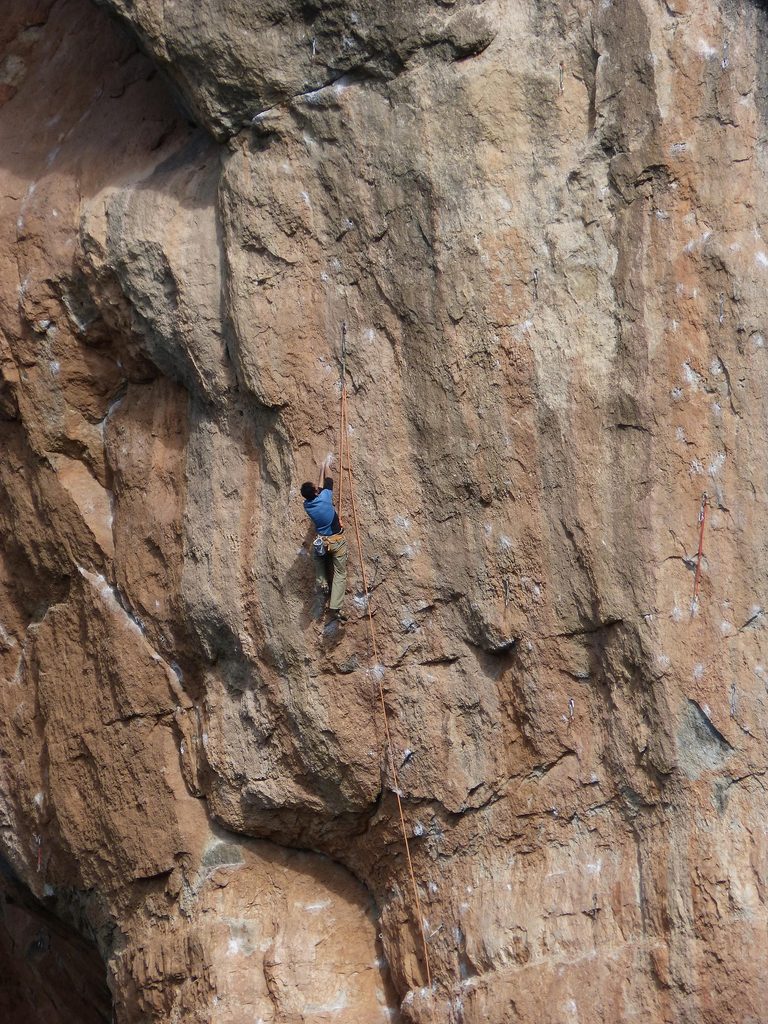
First routes (3 to 5c):
- Panxeta around 3 (Belbedere de l’Esperó Primavera)
- Corona Ciao 5a (Can Marges de Baix)
- Monolit Groc 5c (Can Marges de Baix)
- Flexta 5c (Can Marges de Dalt)
- L’Escola 5c (Grau dels Masets)
The 6s (6a to 6c+):
- Esperó Primavera 35 m, 6a (Esperó Primavera): one of the best routes of its grade in Siurana
- Farigola 6a (L’Herbolari)
- Les dos Cosines 6a (L’Aparador)
- Escuela de Calor 6a (Can Marges de Dalt)
- Primera 6a (Grau dels Masets)
- Els Fenics 6a (El Ditot)
- Filiprim 6a+ (Siuranella Centre)
- Horny Attack 6a+ (Esperó Primavera)
- Spit de Boira 6a+ (Can Marges de Dalt)
- Ateva 6a+ and Rasputín 6a+ (Can Paràsit)
- Trigonometria 6a+/6b (Can Melafots)
- Viernes 13 6b (Can Melafots)
- Primavera Sound 6b (Esperó Primavera)
- La Siuranella three pitches, 6b (Siuranella Centre)
- Parvulitos 6b+ (Salt de la Reina Mora)
- Guru 6b+ (El Ditot): an arête, one of the best in the sector
- Gat Reggae 6c (Can Melafots)
- Directa al Record 6c (Esperó Primavera)
- Sorry Not Clean 6c (L’Aparador)
- Extremoduro 6c (Can Marges de Baix)
- Viagraman 6c+/7a (El Pati)
The 7s (7a to 7c+):
- ¡Ay Mamita! 7a (El Pati)
- Cojón Prieto 7a (L’Herbolari)
- Perigeo 7a (Salt de la Reina Mora)
- Rauxa 7a+, or 7b with the second pitch (L’Aparador)
- Colze de Nena 7a+ (Siuranella Centre)
- Gamba Gamba 7b (Can Piqui Pugui)
- Mandragora 7b/7b+ (Esperó Primavera)
- Llarguada 7b+ (L’Aparador)
- L’Escamarla 7c+ (Siuranella Est)
The 8s:
- Minimal Techno 8a (Salt de la Reina Mora)
- La Cara Que No Miente 8a+ (L’Olla)
- Ramadan 8a+/8b (Siuranella Est)
- Mr. Cheki 8b+ (Can Piqui Pugui)
- Kalea Borroka about 40 m, 8b+ (El Pati)
- L’Odi Social 8c+ (Can Piqui Pugui)
- La Corriola 8c+ (Siuranella Sud)
Grade 9:
- Estado Crítico 9a (El Pati)
- La Rambla 41 m, 9a+ (El Pati)
- La Capella 9b or 9a+ (La Capella)
- Golpe de Estado 9b (El Pati)
- King Capella proposed 9b+, now considered 9b (La Capella)
- Sleeping Lion 40 m, proposed 9b+, now considered 9b (El Pati)
The legendary hard routes: 8c+ and up
Siurana has four decades of hard climbing behind it. These are the routes that made history.
| Route | Grade | First ascent and key repeats | Sector |
|---|---|---|---|
| Sleeping Lion | Proposed 9b+, now considered 9b | Chris Sharma, 28 March 2023; first repeat by Alex Megos in January 2024 | El Pati |
| King Capella | Proposed 9b+, now considered 9b | Will Bosi, March 2021; repeated by Alex Megos and Jakob Schubert the same year | La Capella |
| Golpe de Estado | 9b | Chris Sharma, 17 December 2008; second ascent by Adam Ondra, 13 March 2010 | El Pati |
| La Capella | 9b according to Ondra, 9a+ for several repeaters | Adam Ondra, 16 February 2011 | La Capella |
| La Rambla | 9a+ | Alexander Huber (35 m, 8c+) in 1994; Ramón Julián Puigblanque climbed the 41 m extension, bolted by Dani Andrada, on 8 March 2003 | El Pati |
| Estado Crítico | 9a (the grade was never unanimous) | Ramón Julián Puigblanque, March 2004 (bolted by Dani Andrada); regarded as the first 9a onsight, by Alex Megos on 24 March 2013 | El Pati |
| L’Odi Social | 8c+ | Carles Brascó, 1992 (then 8c) | Can Piqui Pugui |
| Kalea Borroka | 8b+ | About 40 m, one of the most beautiful lines in Siurana; onsighted by Steve McClure in 2009 | El Pati |
La Rambla is one of the most famous routes in Spain. Huber bolted it in 1993 and graded his 35 m line 8c+ because, in his view, it could not be harder than Action Directe, then 8c+. In 2003 Dani Andrada extended it to the anchor of another route, 41 m in all, and Puigblanque’s ascent of the extension was graded 9a+. It now has around thirty ascents, including Sharma, Ondra and Dave Graham, and on 26 February 2017, aged 19, Margo Hayes climbed it and became the first woman to climb a confirmed 9a+.
Estado Crítico has one of the best stories in the valley: in March 2013 Alex Megos, aged 19, went to try La Rambla, could not identify the line, and onsighted Estado Crítico instead.
Sleeping Lion, climbed by Chris Sharma aged 41, is 40 m and 54 moves, including a sustained section of about 35 moves without a rest. All the repeaters (Megos, Díaz-Rullo, Ghisolfi, Sachi Amma) agree that it is 9b.
A little history
Climbing in Siurana
- Mid-1980s: the first sport routes are bolted at Can Rebotat. Joan Olivé, Eduard Burgada, Joan Cabau and Joan Chaparro are among the pioneers. Can Piqui Pugui is developed from 1986.
- Winter 1989: Wolfgang Güllich spends a day in Siurana and tries routes at Can Rebotat.
- 1990: Toni Arbonès becomes warden of the Ciríac Bonet hut and, for twenty years, the most prolific route developer in Siurana. He now runs the campsite and co-wrote the 2003 guidebook.
- 1992: Carles Brascó climbs L’Odi Social, then 8c and now 8c+ because a key hold broke.
- 1994 to 2023: La Rambla, Estado Crítico, Golpe de Estado, La Capella, King Capella and Sleeping Lion (see the table above) put Siurana at the top of world sport climbing.
The village and its legend
Siurana was the last Muslim stronghold in Catalonia. Count Ramon Berenguer IV granted it to Berenguer Arnau in 1146, although the grant was never carried out, and it was conquered between 1153 and 1154. Its castle served as a high-status prison in the 13th century and was destroyed in 1651, on the orders of King Philip IV, at the end of the Reapers’ War. The Romanesque church of Santa Maria is already mentioned in a papal bull of 1154. The village has been a Cultural Asset of National Interest since 1995, and in 2022 the mayor of Cornudella turned down an invitation to join the «most beautiful villages in Spain» association so as not to attract more mass tourism.
According to tradition, when the town fell in 1153 the Moorish queen Abd-el-Azia rode her horse off the cliff rather than be captured, and the rock still bears the mark of the horseshoe. The spot is called the Salt de la Reina Mora, the «Moorish Queen’s Leap», and it is also a climbing sector. Next to the church, a sarcophagus is known as the «tomb of the Moorish queen», although there is no way of knowing whose it is.
Contact the local professionals directly.


Getting to Siurana
Siurana is in the Priorat, a hilly wine region inland from the coast of Tarragona, in southern Catalonia. The nearest city is Reus, about 40 km away; Barcelona is about two hours by car.
Flying in
- Reus airport (REU) is the closest: about 46 km and under an hour by road. It is seasonal: in 2025 it had seven airlines (including Jet2.com, Ryanair, easyJet, TUI and Vueling) and 25 destinations in eight countries, and most passengers came from the UK and Ireland. Jet2.com flies from late March to early November, and Ryanair brought its season start forward to early March in 2026. In recent winters there have been no regular commercial flights, so between November and March, plan on Barcelona.
- Barcelona El Prat (BCN) is the main airport, with flights all year: about 131 km and just under 2 hours by road.
- Girona, Valencia and Zaragoza are further options if flights are cheaper.
Driving
| From | Distance | Time (approx.) |
|---|---|---|
| Reus airport | 46 km (29 miles) | 55 min |
| Reus town | 39 km (24 miles) | 50 min |
| Tarragona | 53 km (33 miles) | 1 h |
| Camp de Tarragona high-speed rail station | 60 km (37 miles) | 1 h 05 |
| Lleida | 71 km (44 miles) | 1 h 25 |
| Barcelona El Prat airport | 131 km (81 miles) | 1 h 55 |
| Barcelona Sants station | 143 km (89 miles) | 2 h |
| Zaragoza | 222 km (138 miles) | 3 h 05 |
| Girona airport | 233 km (145 miles) | 3 h |
| Valencia | 284 km (176 miles) | 3 h 40 |
| Margalef | 40 km (25 miles) | 55 min |
Times are without traffic or stops, to the Siurana car parks.
The route. From Barcelona, take the AP-7 motorway south towards Tarragona, then head for Reus. From Reus, take the N-420 to Les Borges del Camp and the C-242 to Cornudella de Montsant. The turn-off for Siurana is just after Cornudella, towards Ulldemolins; from there a winding road of about 8 km climbs to the village. Drive it slowly. The AP-7 in Catalonia has had no tolls since 1 September 2021; if you leave Barcelona by the C-32 coastal motorway (Castelldefels to El Vendrell), that section is a toll road.
Renting a car: practically essential
The sectors are spread along the valley and the Grau dels Masets track, buses to Cornudella are few and there is no regular bus to the village. Rent a car.
- Where: the main international rental companies have desks at Reus and Barcelona airports. In winter, opening hours at Reus can be limited, so check pick-up and return times.
- Licence: EU and EEA licences are fully valid, and a UK photocard licence does not need an International Driving Permit in Spain. For licences issued elsewhere, Spain’s traffic authority (DGT) recommends carrying an International Driving Permit together with your national licence. Whatever your licence, confirm with your rental company before you travel.
- Deposit and gearbox: most companies want a credit card in the main driver’s name. If you need an automatic, book early.
- Theft: the council has warned of thefts of catalytic converters in the area. Never leave valuables in sight.
Trains, buses and taxis
- Train: Reus station has regional trains to and from Barcelona; high-speed trains stop at Camp de Tarragona, about an hour’s drive from Siurana. Check current timetables with Renfe and Rodalies de Catalunya.
- Reus airport to Reus: bus line 50 (about €4; since 2025 it runs every day of the year, from 7:25 to 21:30). Check the current timetable and fare with Reus Transport.
- Bus to Cornudella: bus line 89 links Reus with Cornudella de Montsant (check the current operator and timetable), but services are few and timetables change. On the official 2022 timetable some services ran only on request, booked on +34 977 547 290; ask whether this still applies. The tourist office in Cornudella (Turisme Siurana, +34 977 821 000) can help with current times.
- Cornudella to Siurana: about 8 km with no regular bus. Take a taxi: Montsant Natura Adventures (+34 977 821 313 or +34 655 805 849, 7 seats) or Taxi La Diligència (+34 690 089 281, 8 seats). The tourist office has published indicative fares from Cornudella of about €40 to Reus and €60 to Tarragona; confirm when you book.
With a base in the village, many sectors are within walking distance, but distant ones such as Grau dels Masets really need a car.
Parking and access
- Fee: €3 per vehicle per day in the regulated car parks, set by the council of Cornudella de Montsant and charged all year.
- Where: there are three car parks, known as P1, P2 and P3. P1 is about 200 m from the village and fills early; P2 (Lo Codolar) is three hairpin bends further down; P3 is lower still. For the valley sectors, use the laybys on the access road that the guidebook marks for each sector.
- No cars in the village, no sleeping in the car parks: you cannot drive through the village or sleep in your vehicle in the car parks; motorhomes go to the campsite or to the area the council indicates in Cornudella.
- Busy days: on the busiest days the council has restricted cars on the access road once the car parks are full.
- Council contact: Ajuntament de Cornudella de Montsant, +34 977 561 416. The council also posts notices on its InfoCornudella WhatsApp channel.
Rules, closures and the environment
- Cliff-nesting birds. Peregrine falcons, Bonelli’s eagles, golden eagles and eagle owls breed on the cliffs of Siurana. Respect all closure signs. There has been a signposted closure at the right-hand end of Can Marges de Dalt, and others can appear in any season.
- Protected area. Siurana lies within the Catalan network of protected natural areas (PEIN) and Natura 2000. The proposed Prades Mountains natural park (see «Before you go» above) had not been approved when this guide was last reviewed, and it is not settled whether it will include Siurana. For now, the signs at each sector apply.
- Siurana is not in the Montsant Natural Park. The official map of the Parc Natural de la Serra de Montsant leaves Siurana and its reservoir outside the park. If you combine your trip with crags inside the park (Margalef’s surroundings, La Morera de Montsant, Escaladei), the park divides its cliffs into three zones: free (climbing allowed all year), conditional (climbing allowed only from 15 July to 31 December) and prohibited (no climbing). Signs and the official map on site are what count. Park office: +34 977 827 310, pnmontsant@gencat.cat. Inside the park, free camping is banned and the Catalan fire rules below apply.
- Fire. From 15 March to 15 October you may not light a fire for any purpose on forest land in Catalonia, and outside that period you still need to notify the council first. In practice: never light a fire at the crag or in the countryside. On days of very high or extreme fire risk (Pla Alfa alerts 3 and 4), the Catalan fire alert plan can restrict access to forest areas and suspend sports activities in them: check the Generalitat’s daily Pla Alfa map before you go in summer and early autumn.
- Camping and neighbours. Free camping is not allowed; vans and motorhomes go to the campsite or to the motorhome area in Cornudella. Only a few dozen people live in Siurana, and on busy weekends the village fills with visitors: keep the noise down.
- Bolts. Part of the profit from the printed guidebook goes to the Siurana bolting fund. If you see a dubious bolt or anchor, report it rather than tampering with it.
Where to stay
Siurana is tiny, so a lot of visitors stay in Cornudella de Montsant (533 m, about 1,000 inhabitants), a 15-minute drive below, which also has the shops and services. Book months ahead for the festival weekend, long weekends and Easter.
In Siurana
- Càmping Siurana: on the Cornudella to Siurana road, at km 7. Pitches, bungalows and mobile homes, with a bar-restaurant and a swimming pool. Phone +34 636 052 736 or +34 977 821 383. Confirm prices and opening dates when you book.
- Hotel La Siuranella: a small hotel in the village, with the Els Tallers restaurant (+34 977 821 144).
- Refugi de Siurana (Ciríac Bonet): the mountain hut carved into the rock in the middle of the village, run by the Centre Excursionista de Catalunya (CEC). Its bar-restaurant is open to everyone, but overnight stays are for CEC members only: two rooms that sleep six each in bunks, let only as a whole room (€90 per room for members), plus tourist tax. Bookings: refugisiurana@cec.cat or +34 675 347 447.
- Holiday rentals: Can Font (tourist home, +34 601 096 368), Cal Correu and other holiday houses listed by the tourist office.
In Cornudella de Montsant and around
- Lo Refugi (Carrer Major 37, +34 977 821 313), with a gastro-bar.
- Rural houses and apartments: La Vileta (+34 977 821 006), Casa Estivill (+34 977 821 032), Cal Giral II (+34 977 821 082), Molí del Pont (+34 600 702 940), Mas del Salín (+34 699 975 557) and others on the tourist office’s list.
- Further afield: La Morera de Montsant (Hotel Balcó del Priorat), Falset (several hotels), Ulldemolins (Càmping Montsant Park) and Prades (Camping Prades Park). Reus has plenty of hotels, about 50 minutes’ drive away.
Motorhomes and vans. There is a motorhome area in Cornudella (check the current location and price with the council), or use the campsite.
Tourist tax. Catalonia charges a small tourist tax per person on overnight stays, added to your bill.
Food, supplies and shops
- Restaurants and bars. Siurana and Cornudella have several. The tourist office lists, among others, La Serra (+34 977 821 106), Restaurant Siurana (+34 977 821 027), Els Tallers at the hotel (+34 977 821 144), Bar Lo Refugi (+34 977 821 313), Fonda El Recó (+34 977 821 032), the campsite bar (+34 977 821 383) and Quatre Molins (+34 977 821 004). There is also a restaurant by the reservoir. Opening hours vary with the season, so call ahead.
- Groceries. Do your big shop in Reus before you drive up. In October 2026 a bonÀrea supermarket opened in Falset (Carrer de Sant Marcel 10-12; Monday to Saturday 9:00 to 21:00, Sundays and holidays 9:00 to 14:00). In Cornudella, the farm shop of the cooperative winery (Carrer del Comte de Rius 2, +34 977 821 329) sells local produce and wine, and Siurana has a shop with local products such as jams, honey and herbs.
- Market. Falset has a weekly market on Tuesdays in the Plaça de la Quartera.
- Climbing gear. Goma2, on Carrer del Comte de Rius 3 in Cornudella (+34 977 82 12 32), sells climbing shoes and gear and is a meeting point for climbers; call before relying on it. Large sports chains are in Reus.
- Fuel and services. Cornudella has a petrol station, a health centre (CAP), a tourist office and a swimming pool.
Practical information for visitors
- Emergencies: 112, free from any phone. In Catalonia, mountain rescue is carried out by the Generalitat’s fire and rescue service (Bombers de la Generalitat).
- Health care. Cornudella has a primary health centre (CAP). The main hospital in the area is the Hospital Universitari Sant Joan de Reus (Avinguda del Doctor Josep Laporte 2, +34 977 31 03 00), about 45 minutes by car.
- Insurance. The European Health Insurance Card (EHIC) and the UK’s GHIC give access to necessary public health care on the same terms as residents, but not to private care, repatriation or mountain rescue. Visitors from the US, Canada, Australia and elsewhere need private travel insurance. Whatever your passport, get a policy that explicitly covers sport climbing, search and rescue and repatriation. UK travellers can call NHS Overseas Healthcare Services on +44 191 218 1999 with card questions.
- Licences. The Catalan federation licence (FEEC) is designed mainly for local climbers and is processed through a Catalan club, so it rarely suits a short visit. If you belong to a club or federation at home, check whether its insurance covers sport climbing in Spain (in the UK, the BMC offers travel insurance for UK-resident members; German Alpine Club members should ask their insurer).
- Language. Catalan is the language of Catalonia, and Spanish is also official. Signs are mostly in Catalan. Useful words: «pantà» (reservoir), «cingle» (cliff), «grau» (a steep passage through a cliff), «totxo» (block), «camí» (path) and «Can» or «Ca» («the house of», common in sector names).
- Opening hours. Lunch is usually 13:00 to 16:00 and dinner from about 20:00. Small shops often close roughly between 14:00 and 17:00, and many close on Sundays. Village restaurants change their opening days with the season, so call ahead.
- Money, plugs and time. Euros; carry some cash for the car park and village bars. 230 V with two round pins (types C and F). Central European Time.
- Tourist information. Turisme Siurana in Cornudella (+34 977 821 000) and the Priorat tourist office in Falset (+34 977 831 023, oit@priorat.cat).
Gear, safety and etiquette
- Rope: 70 m. A 60 m rope does most routes, but there are 35 to 45 m lines at El Pati, L’Aparador, Can Codolar and Salt de la Reina Mora. Always tie a knot in the end of the rope.
- Quickdraws: 12 to 16 for most routes, 18 to 20 for the longest.
- Stick clip: strongly recommended at Can Piqui Pugui (ledge starts and high first bolts).
- Helmet: useful below ledges and loose rock, and on approaches with steps and iron rungs.
- Warm layers: in winter the northwest wind is cold and the sun leaves the walls quickly.
- Exposed approaches: L’Olla, Siuranella Centre and Est, Can Gans Dionís and Négociée have exposed ledges, downclimbs or fixed ropes. Take them seriously and keep children away.
- Polish: the most popular routes have polished holds; warm up properly.
- Plan ahead: coverage is patchy, so leave your plan with someone and carry the topo offline.
- Etiquette: park only where allowed, do not drive into the village, keep the noise down, take all your rubbish home, close the gates on the Grau dels Masets track, respect bird closures, do not leave ropes hanging on routes you are not climbing, never tamper with bolts or anchors, and buy the local guidebook (part of the profit funds re-bolting).
Rest days and things to do
- Walk around Siurana. Cobbled streets, the ruins of the castle, the Romanesque church of Santa Maria (12th to 13th century) and the viewpoints of the Salt de la Reina Mora and La Trona, looking over the reservoir and the Montsant range. The village celebrates its Jubileu festival on 9 May and its main festival on 15 August.
- The Siurana reservoir. Completed in 1973, with a 63 m dam. There is a restaurant next to the water.
- Cornudella de Montsant. A pleasant village with a modernist cooperative winery building from 1919 by Cèsar Martinell, a follower of Gaudí, and the Peris-Aragonès museum (visits through the tourist office).
- Priorat wine. The area produces wines under two appellations, DOQ Priorat and DO Montsant. The Priorat wine route groups nearly fifty wineries open to visitors; most ask you to book in advance, and the harvest is in September and October.
- Cartoixa d’Escaladei. The old Carthusian monastery (charterhouse) of Escaladei, at the foot of Montsant, 16 km (about 20 minutes) from Cornudella. Open Tuesday to Sunday, closed on Mondays that are not public holidays; opening hours change with the season, so check before you go (+34 977 63 85 56).
- Hiking in Montsant. The natural park has twenty official walking routes. From Cornudella, the Roca Corbatera loop (8.3 km, about 3 h 30, moderate) climbs to the highest point of the range.
- Prades and Poblet. Prades is a village of reddish stone 14 km from Cornudella. The Royal Monastery of Poblet, a UNESCO World Heritage Site, is 39 km away (about 50 minutes); it opens daily with a midday break: Monday to Saturday 10:00 to 12:30 and 15:00 to 18:00, Sundays and holidays 10:30 to 12:30 and 15:00 to 18:00 (afternoons until 18:30 from mid-June to mid-September). Closed on 1 and 6 January and 25 and 26 December.
- Tarragona. The Roman city of Tarraco, also a World Heritage Site, is about 45 minutes from Cornudella and an hour from Siurana. A combined ticket covers five Roman sites.
- Reus. The birthplace of Gaudí, with modernist architecture and the Gaudí Centre, about 35 minutes from Cornudella.
- The coast and Falset. Cambrils and Salou, with beaches and harbours, are about 45 minutes from Cornudella; Falset, the capital of the Priorat, has a Tuesday market.
When it rains
Many walls are out of action when it rains, but Siurana’s rock often dries within a few hours. Options:
- L’Aparador: the steep walls around Rauxa usually stay dry except in the wettest conditions.
- Masriudoms: an overhanging tufa cave, one of the few crags in the Tarragona area where you can climb in the rain. It is on private land: check the current access situation before you go.
- L’Escletxa: an overhanging wall in the Montsant range that stays dry. Check the park zoning before you climb in Montsant.
- Margalef: some of its overhangs stay dry in the rain (see «Other crags nearby»).
- Indoor wall: SLAB in Reus (Carrer de Mèxic 37), with more than 550 square metres of climbing, a roped area and a bouldering area. A day pass costs €10 (€8 before 15:00 on weekdays), and you can rent shoes and a harness. Open Monday to Friday 10:00 to 22:00, Saturday 10:30 to 19:00 and Sunday 10:30 to 14:30 (different hours in August).
Other crags nearby for a longer trip
- Margalef (about 40 km by road, under an hour): pocketed conglomerate, more than 1,800 routes from 4 to 9b+, with many in the 5s and 6s. Since 14 October 2025, driving to its two main climbing areas requires an online reservation and a fee of €5 per vehicle per day; overnight stays, camping and fires are not allowed in the car parks. Read our Margalef climbing guide.
- Montsant: conglomerate walls of 15 to 20 m, from 3 to 9a+, inside the natural park. The massif has around 1,500 routes, many of them at Margalef. Climbing is regulated by the free, conditional and prohibited zones explained above.
- Arbolí: orange limestone; El Falcó is one of the best walls for 6c to 7b. About half an hour by car.
- La Mussara: limestone with an alpine feel, with classic cracks and corners in the lower and middle grades and far fewer people. Respect any nesting closures on site.
- Vilanova de Prades: more than 400 short, demanding routes. Barranc de Viern (4+ to 6a) is sheltered from the wind.
- Masriudoms: see «When it rains».
Itineraries for three days, one week and two weeks
Each plan follows the rule of the sun: sunny sectors when it is cold, shady ones when it is warm. With small holds and sharp rock, a rest day every third or fourth day works well.
Three days, 6a to 6c
- Day 1: Can Marges de Dalt and Can Paràsit in the morning to get used to the rock; Can Melafots in the afternoon if it is cold.
- Day 2: Esperó Primavera (sun from mid-morning), with the 35 m classic and the 6a+ and 6b routes beside it.
- Day 3: Grau dels Masets Esquerra and Camí.
- In summer: swap day 2 for L’Aparador, in reliable shade, and climb in the morning or evening.
Three days, 7a to 8a
- Day 1: Salt de la Reina Mora or Siuranella Centre (sun in winter; check the approach in the topo), finishing at Can Melafots if you want more routes.
- Day 2: El Pati in the morning (shade) and Siuranella Est in the afternoon (shade).
- Day 3: Can Piqui Pugui, with a stick clip, and perhaps an 8a classic such as L’Anabolica.
- In summer: L’Aparador (with a 70 m rope), Reserva India and L’Olla in the morning.
Three days, 8a and harder
Combine L’Olla (power, in the morning), El Pati (stamina) and La Capella. For a change of style, try the shade of Négociée on mild days or the technical 8s of Siuranella Sud in winter.
Three days for beginners and families
- Day 1: Can Paràsit and Can Marges de Baix.
- Day 2: the Belbedere de l’Esperó Primavera and the first routes of Esperó Primavera.
- Day 3: rest in the village: the castle and the Salt de la Reina Mora viewpoint.
To organise these days safely and learn to handle long routes, a qualified guide is the best option.
One week (Siurana and a taste of Margalef)
Base yourself in Cornudella de Montsant: about 8 km from Siurana and 33 km (about 45 minutes) from Margalef.
- Days 1 and 2: Siurana, getting used to the rock: Can Marges de Dalt, Can Paràsit and Can Melafots (6a to 6c), or Salt de la Reina Mora and Siuranella Centre (the 7s). In warm weather, start early at L’Aparador, Reserva India, Can Codolar or L’Olla.
- Day 3: Siurana classics: Esperó Primavera, or El Pati in the morning shade.
- Day 4: rest: Escaladei and a Priorat winery, or Poblet and Prades.
- Day 5: Margalef (book the car park in advance): Camí de l’Ermita or Espadelles; in winter, go for the sun.
- Day 6: Margalef again (La Catedral and L’Àtic for longer routes) or back to Siurana for a project.
- Day 7: your favourite Siurana sector, leaving time for the airport (Reus airport is about 40 minutes from Cornudella; Barcelona about 1 h 45).
To stay in Siurana all week, replace the Margalef days with Grau dels Masets and El Ditot (the 6s) or L’Olla and Négociée (the 8s).
Two weeks
- Days 1 to 3: Siurana, following the three-day plan for your grade.
- Day 4: rest in the village.
- Day 5: Grau dels Masets, El Ditot and Corral Nou (the 6s), or L’Olla and Négociée (the 8s).
- Day 6: long rest day: Poblet, Roman Tarragona or Reus.
- Days 7 and 8: Margalef (with a daily car park reservation): Camí de l’Ermita, Punta Espadelles and Espadelles Extensión in the sun; La Catedral and L’Àtic for longer routes.
- Day 9: rest: the Roca Corbatera loop in Montsant.
- Days 10 and 11: back to Siurana for your projects, choosing sun or shade by the forecast.
- Day 12: rest, wine and the Cartoixa d’Escaladei.
- Days 13 and 14: Arbolí (El Falcó), La Mussara or Vilanova de Prades, or a last round of your favourite Siurana sectors. A single base in Cornudella for the whole fortnight works well.
What to pack, by season
- All year: 70 m rope, 12 to 20 quickdraws, stick clip, helmet, chalk and a brush, approach shoes with good grip, first-aid kit, headlamp, offline topo and maps, insurance documents (and your EHIC or GHIC), and cash for the car park.
- Winter (December to February): a light down jacket, hat and gloves for belaying in the wind, and a T-shirt for the sunny walls at midday. The days are short.
- Spring and autumn (March to May, September to November): thin layers and a rain jacket (September and October are the wettest months), sun cream and a cap.
- Summer (June to August): light-coloured clothes, a sun hat, high-factor sun cream, 2 to 3 litres of water per person and an early alarm: climb at dawn in the shade.
Guidebooks and information
- Siurana Climbing, 4th edition (June 2023), by David Brascó and Natàlia Campillo: 352 pages, 2,014 routes in 75 areas from 3 to 9b+, with aspect, routes by grade and an access map for every sector, in Spanish and English. It can be hard to find online, so ask at the Siurana campsite or the Goma2 shop in Cornudella.
- Tarragona Climbs, 3rd edition (September 2023), by Pete O’Donovan and Dani Andrada: about 4,800 routes in 11 areas, including Siurana. A good alternative if you plan to visit several crags.
- Online topos: the main climbing topo apps cover Siurana, with GPS and offline download. Download before you go.
- Tourist information: Turisme Siurana (+34 977 821 000) and the Priorat tourist office in Falset (+34 977 831 023).
- Council notices: the InfoCornudella WhatsApp channel.
- More destinations: our English climbing guides cover other climbing areas in Spain.
Plan your trip with qualified guides
If you want help choosing sectors for the conditions, learning to handle Siurana’s long routes and exposed approaches, or taking your first steps on rock safely, you can contact qualified mountain guides who work in Siurana and the Tarragona area, and browse their courses and activities, through Destino Climbing.
Frequently asked questions about climbing in Siurana
When is the best time to climb in Siurana?
From September to May. In winter, choose the sunny sectors (Siuranella Sud and Centre, Salt de la Reina Mora, Can Piqui Pugui, Can Melafots); in summer, the shady ones (L’Aparador, Reserva India, L’Olla in the morning). September and October are the wettest months.
Is Siurana good for beginners?
Not especially: routes at 5c or below are few. Can Paràsit, Can Marges, the Belbedere de l’Esperó Primavera and Grau dels Masets Esquerra and Camí work well, but go with someone who knows the approaches, or with a qualified guide.
Are the grades in Siurana hard?
They have a reputation for being stiff: technical, fingery climbing, some polished classics and old-school grading. Most visitors drop a grade or so for the first few days.
Do I need a car?
In practice, yes. Buses to Cornudella are few, there is no regular bus to Siurana, and the sectors are spread along the valley. Rent one at Reus or Barcelona airport.
Which airport is closest to Siurana?
Reus, about 46 km away, but it is seasonal and has had no regular commercial flights in recent winters. Barcelona El Prat, about 131 km and two hours away, works all year.
Where do I park and how much does it cost?
In the regulated car parks (P1, P2 and P3), for €3 per vehicle per day. P1, closest to the village, fills early. You cannot drive into the village or sleep in the car parks. For the valley sectors, use the laybys on the access road.
Where should I stay?
At the campsite or the hotel in Siurana, or in the rural houses and apartments of Cornudella de Montsant, about 8 km away. The village hut only takes overnight guests who are members of the Centre Excursionista de Catalunya. Book early for the festival weekend, long weekends and Easter.
What rope length do I need?
A 60 m rope does most routes, but some are 35 to 45 m long (El Pati, L’Aparador, Can Codolar, Salt de la Reina Mora), so a 70 m rope is the most comfortable choice. Bring 12 to 16 quickdraws, up to 20 for the longest routes, and a stick clip for Can Piqui Pugui.
Are there bird-nesting closures?
Peregrine falcons, Bonelli’s eagles, golden eagles and eagle owls breed on the cliffs, and there has been a signposted closure at the right-hand end of Can Marges de Dalt. Siurana is outside the Montsant Natural Park, so the park’s zoning does not apply here, but always respect the signs on site.
Does my EHIC or GHIC cover a climbing accident?
It covers necessary public health care, but not mountain rescue, private care or repatriation. Get travel insurance that explicitly covers sport climbing and rescue. In an emergency, call 112.
Can I combine Siurana with Margalef?
Yes. Margalef is about 40 km away by road, under an hour by car. Driving into its main climbing areas requires an online reservation and a fee of €5 per vehicle per day.
Informational guide written for Destino Climbing. Data on routes, grades, access, fees, closures, prices and timetables are indicative and change over time; check the current regulations and the real condition of each sector before you go. Last reviewed: October 2026.